Flash Flood Prep for Landed Homes in KL and Selangor
Advice · Published 21 October 2026
Reviewed and approved by a NearbyWise editor before publishing.
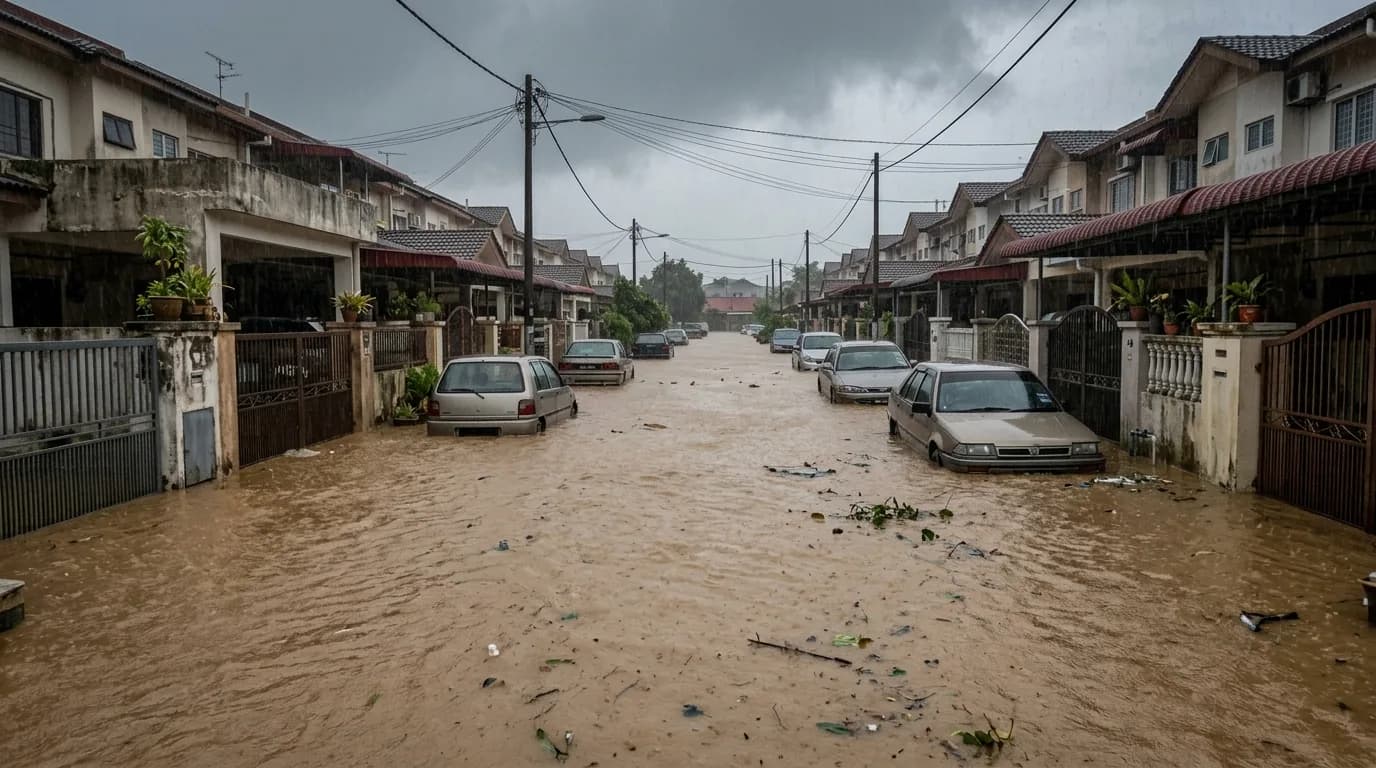
If you live in a landed home in the Klang Valley, you know how quickly a heavy afternoon downpour can turn a quiet road into a fast-moving stream. Flash floods can rise within an hour or so, often with little warning. The ground floor of a terrace, semi-detached or bungalow is usually the first to suffer. A little preparation, done calmly on a dry day, goes a long way. This checklist covers what to move up, what to pack in a grab bag and what to do in the minutes before water arrives. None of it involves any risky electrical work.
Know your risk and your warning signs
Start by understanding how water behaves around your home. Ask neighbours who have lived on your street longer where water collected in past storms, and notice which drains overflow first during heavy rain. Homes near rivers, monsoon drains, low-lying junctions or the bottom of a slope tend to flood sooner.
Get into the habit of checking official weather and flood alerts, especially during the monsoon transition months when intense evening storms are common. Join your residents' association or neighbourhood chat group too, as people upstream often spot rising water first.
Useful warning signs to watch for:
- Drains running full and fast
- Water pooling at the end of your road
- Prolonged, very heavy rain over a short period
If you see these, start your preparation steps rather than waiting to see what happens.
What to move up first
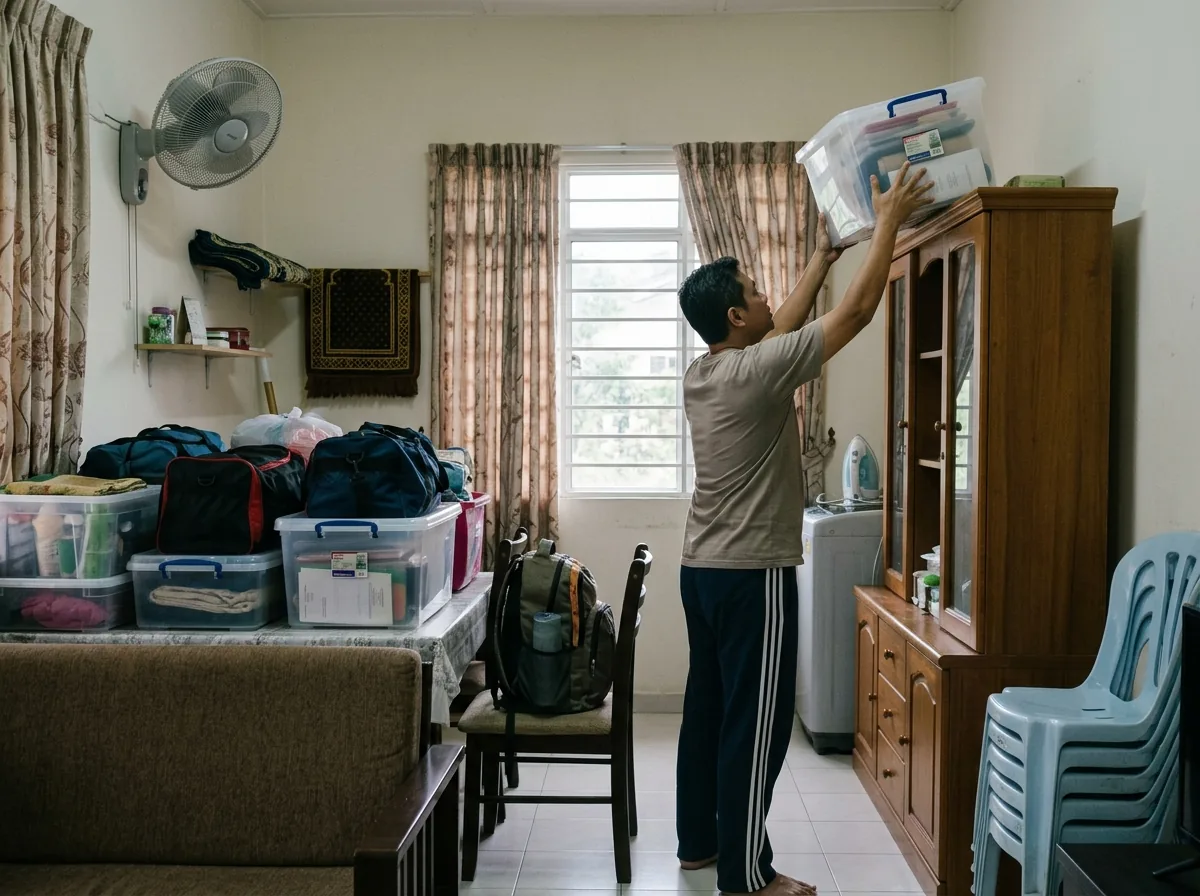
On a dry day, walk through your ground floor and decide what goes upstairs or onto high shelves when a flood warning comes. Having this sorted in advance means you can act in minutes rather than hesitating.
Move up first:
- Important documents, laptops, phones and chargers
- Medicines and anything you need daily
- Photo albums, sentimental items and children's schoolwork
- Small appliances such as rice cookers, kettles and fans (unplugged, only if the floor and your hands are dry)
- Rugs, cushions and soft furnishings that soak up water
For heavy furniture you can't carry, raise it on sturdy plastic crates or bricks. Keep a few stackable crates in a store room for this purpose. If you have a single-storey home, consider a high cupboard or a sealed, waterproof storage box kept on a tall shelf.
Pack an emergency grab bag
A grab bag is a small, waterproof bag you can take if you need to leave in a hurry. Pack it now and keep it upstairs or near the door, somewhere everyone in your household knows about.
What to include:
- Copies of identity cards, passports and insurance details in a zip-lock bag
- A list of emergency contacts written on paper
- Prescription medicines for a few days and a basic first-aid kit
- A torch, spare batteries and a fully charged power bank
- Drinking water and ready-to-eat snacks
- A change of clothes, a towel and a rain poncho
- Some cash in small notes
- Items for babies, older relatives or pets, such as nappies, glasses or pet food
Check the bag every few months, replace expired items and recharge the power bank.
Before the water arrives: a quick checklist
When heavy rain sets in and water starts to rise, work through a short, calm routine. Doing the same steps each time makes it easier under pressure.
- Move your car to higher ground, such as a nearby multi-storey car park or a raised road, if it is safe to drive.
- Lift your planned items onto upper floors or high shelves.
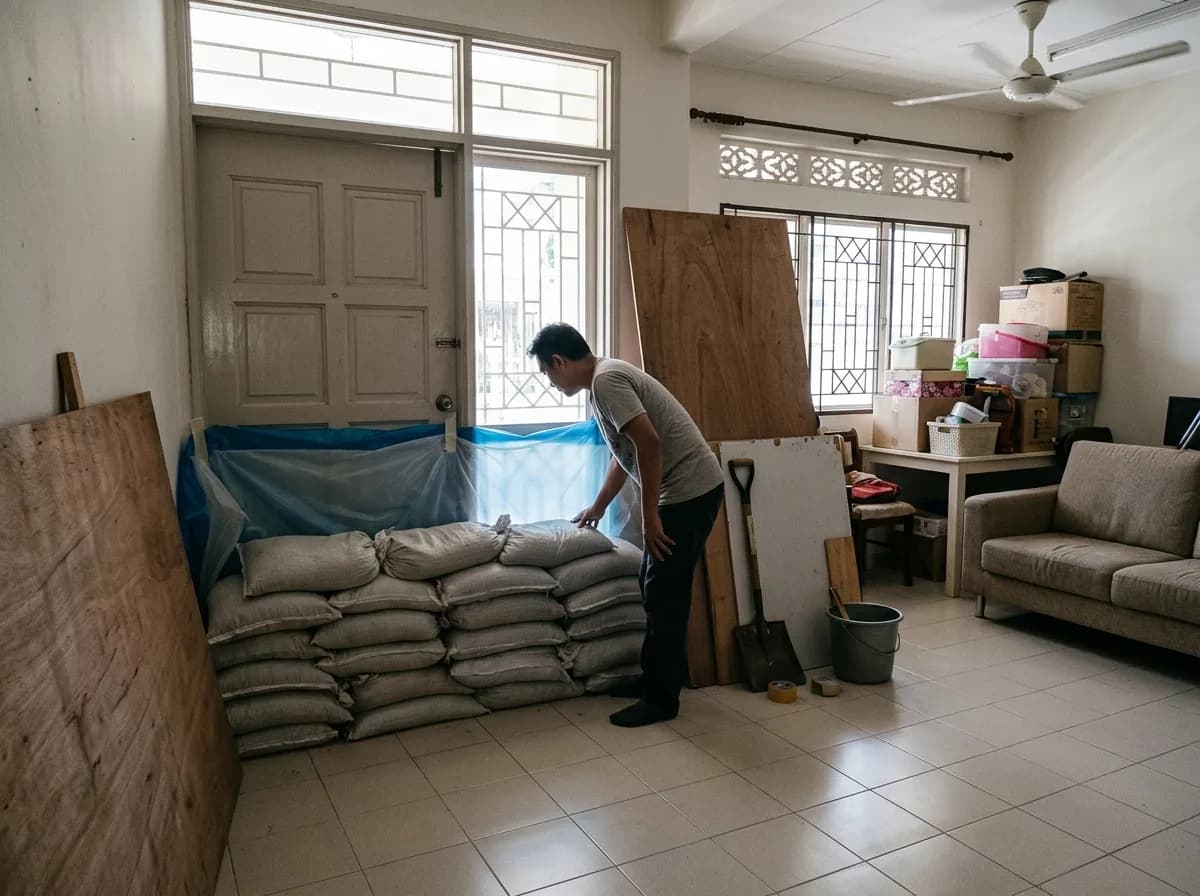
- Place sandbags or water barriers at doors and gate openings if you have them ready.
- Bring in loose outdoor items like pots, bins and bicycles that could float away or block drains.
- Fill a few containers with clean water in case supply is affected.
- Charge phones and keep your grab bag close.
If the water is already entering the house, or you are told to evacuate, leave your belongings behind. Possessions can be replaced; your safety cannot.
Electricity and gas: staying safe without DIY
Water and electricity are a dangerous mix, so keep this part simple. Never attempt any rewiring, moving sockets or other electrical work yourself.
If flooding looks likely and your floor is completely dry, it is generally sensible to switch off the power at your main switch, and to turn off your gas cylinder valve. Learn where your main switch is now, while there's no emergency.
If there is already water on the floor, near the switchboard or around appliances, do not touch anything electrical. Leave the house and call for help instead.
After a flood, don't switch the power back on until a qualified electrician has checked your wiring and appliances. If you want sockets raised or your system made more flood-resilient, that is a job for a licensed professional, never a weekend project.
Make a plan with your household and neighbours
A plan that lives only in your head won't help much in a panic. Sit down with everyone in your home and agree on a few basics:
- Where you will go if you need to leave, such as a relative's home or a local relief centre
- Who is responsible for children, older family members or pets
- A meeting point if you get separated
- One contact person outside the flood area that everyone can update
Save emergency numbers, including 999, on every phone and write them down too.
It also helps to look out for neighbours. Older residents, people living alone or anyone with limited mobility may need a hand moving things or a lift to safety. A quick knock on the door, offered respectfully, can make a real difference.
After the water drops
Once the flood recedes, the urge to rush back in is strong, but take it slowly. Only return when authorities say it is safe.
- Wear rubber boots and gloves, as floodwater can carry sewage, sharp debris and even snakes.
- Take photos and videos of the damage before you clean, which can help with any insurance claim.
- Open windows and doors to air the house and help prevent mould.
- Throw away food, medicines and cosmetics that touched floodwater.
- Wash your hands often and keep children away from muddy areas.
Cleaning up after a flood is exhausting and upsetting. Accept help when it is offered and take breaks. If you feel unwell after contact with floodwater, such as fever or muscle aches, see a doctor promptly, and if the stress lingers, talking to a counsellor can help.
Frequently asked questions
How many sandbags do I need for a landed home?
It depends on the width of your doors, gates and any low openings, so measure these and plan to cover each one. Ask your local council or residents' association whether sandbags are distributed in your area before the rainy season.
Should I switch off the electricity before a flood?
If your floor and hands are completely dry, switching off at the main switch is generally a sensible precaution. If water is already present, don't touch anything electrical; leave and call for help, and have a qualified electrician check everything afterwards.
Is it safe to drive through floodwater?
It's best to avoid it, as shallow-looking water can hide open drains, strong currents and debris, and cars can stall or be swept away. Move your car to higher ground early, before roads flood.
Where should I keep my emergency grab bag?
Keep it somewhere high and easy to reach, such as near the stairs or by the main door on an upper floor. Make sure everyone in your household knows exactly where it is.
This is general information to help you plan. Something here wrong or out of date? Report a correction.