How to Stop Mould in Your KL Condo in the Rainy Season
Advice · Published 30 October 2026
Reviewed and approved by a NearbyWise editor before publishing.
Kuala Lumpur's rainy months bring heavy afternoon downpours and damp air that barely shifts. For many condo dwellers, they also bring black speckles along the bathroom grout or a musty smell drifting out of the wardrobe. Mould thrives where moisture lingers and air stands still. High-rise units with small windows, enclosed bathrooms and closed-up air-conditioned bedrooms can give it plenty of both. The good news is that a few steady habits make a real difference. This guide shows you how to keep air moving, dry out the usual trouble spots, clean safely and protect your clothes, shoes and bags, so your home stays fresh through the wettest stretch of the year.
Find where the damp comes from
Before you scrub anything, spend a few minutes working out why mould is appearing where it is. In most KL condos, moisture comes from a handful of everyday sources:
- Showers and cooking, which release steam into small, enclosed rooms
- Laundry dried indoors when rain makes the balcony or yard unusable
- Cold surfaces, such as walls near the air-conditioner or windows, where humid air condenses
- Leaks from pipes, window seals or the unit above
Walk around your home on a wet day and note any damp patches, steamed-up glass or musty corners. A small notebook or a few phone photos help you see whether a spot is growing over time. Once you know the cause, you can deal with it directly, rather than cleaning the same patch every week.
Keep the air moving every day
Still, humid air is mould's best friend, so circulation is your first line of defence. On dry spells between showers, even for an hour or two, open windows on opposite sides of your unit to create a cross-breeze. Leave internal doors open where you can, so air isn't trapped in bedrooms and storerooms.
A standing fan or ceiling fan pointed towards damp corners helps a great deal, especially in rooms you keep closed during the day. If your air-conditioner has a dry or dehumidify mode, it can help on very muggy days. A plug-in dehumidifier is worth considering for the wettest room, often the one where laundry dries. Empty its water tank regularly and keep it clean. Try not to push furniture flat against external walls; a small gap lets air flow behind it.
Tame the bathroom
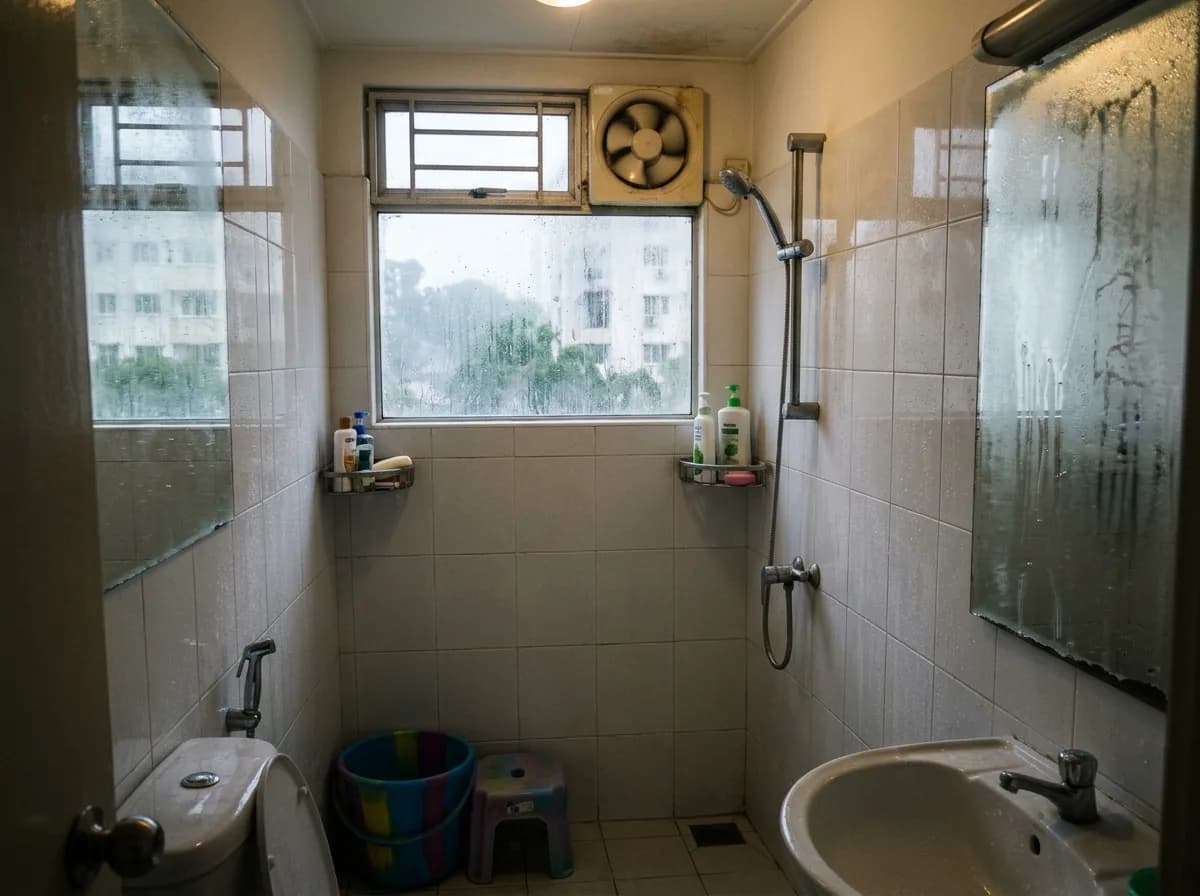
Bathrooms are where most condo mould starts, because they are small, often windowless and used several times a day. After every shower, run the exhaust fan for a good while and leave the door open once you're done. A quick wipe of tiles and glass with a squeegee or old towel removes much of the water that would otherwise sit on the grout.
Other simple habits help too:
- Hang towels and bath mats to dry fully, ideally outside the bathroom
- Keep toiletries on a rack rather than in puddles on the floor or ledge
- Wash or replace shower curtains when they start to spot
- Give grout and silicone a light weekly clean before marks set in
If the exhaust fan seems weak or noisy, ask building management or a qualified technician to check it rather than opening it up yourself.
Protect wardrobes, clothes and leather
Built-in wardrobes against external walls can trap cool, damp air, and you may not notice until a jacket or handbag comes out fuzzy. Open wardrobe doors for a while each day, and avoid packing clothes in so tightly that air cannot pass between them.
Only put clothes away when they are completely dry. Laundry dried indoors on a rainy day often feels dry but still holds moisture. Moisture-absorbing containers or reusable silica packs on wardrobe shelves can help, as long as you empty or refresh them regularly. Store leather shoes, belts and bags with some breathing room, and bring them out to air occasionally. For things you rarely use, breathable fabric bags are kinder than sealed plastic, which can trap humidity inside. Wipe the inside of the wardrobe now and then, and look behind it for hidden spots.
Watch walls and ceilings
Small grey or black dots on a wall or ceiling are an early warning, so catch them before they spread. Pay particular attention to corners, the area around air-conditioner units, the wall behind the bed or sofa, and ceilings under bathrooms in the unit above.
A patch that keeps coming back, a brown water stain, bubbling paint or a damp feel to the touch often points to a leak rather than everyday humidity. In that case, cleaning alone won't solve it. Take dated photos, then let your landlord or building management know in writing so the source can be traced and repaired, especially if the water may be coming from a neighbouring unit or a shared pipe. When you repaint after a repair, let the wall dry thoroughly first. Ask your hardware shop about mould-resistant paint suitable for humid rooms.
Clean mould safely
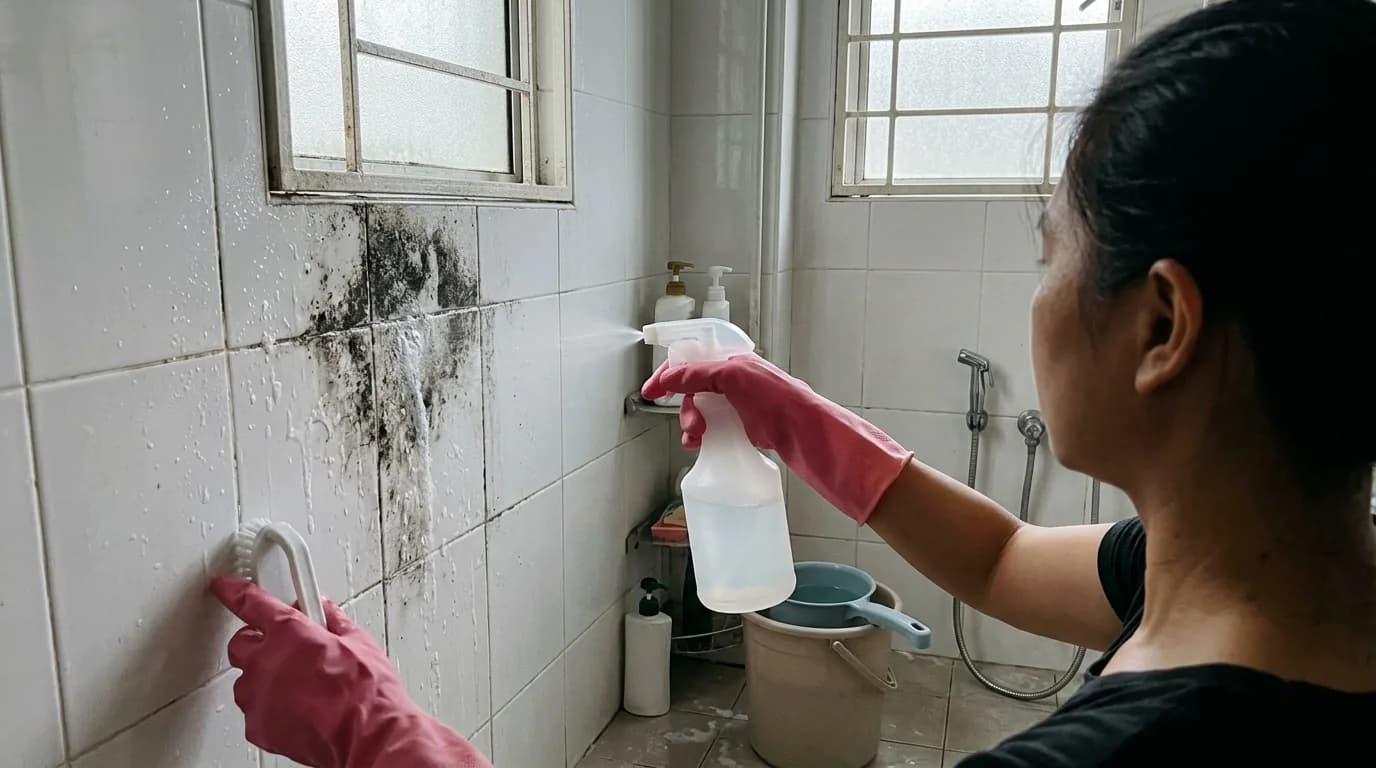
For small surface patches, you can usually clean them yourself, but go gently and protect yourself. Open a window or run a fan, and wear rubber gloves. A mask and eye protection are sensible too, especially if you are cleaning overhead on a ceiling.
Use a household cleaner labelled for mould and follow the instructions on the bottle. Never mix products: combining bleach with ammonia, vinegar or other cleaners can release harmful fumes. Scrub the area, wipe it clean, then dry the surface thoroughly, because leftover moisture invites the mould straight back. On painted walls, test any product on a hidden spot first.
Throw away cloths and sponges after heavy mould cleaning rather than reusing them. Soft items such as old pillows or mattresses that are badly affected are often better replaced than rescued.
Know when to call for help
Some situations are beyond a weekend scrub. If mould covers a large area, keeps returning despite your best efforts, or smells strongly even after cleaning, it is time to bring in help. Speak to your landlord or building management first. They can arrange for a qualified contractor to find hidden leaks, check ventilation or treat the problem properly.
Your health matters too. If you or anyone in your household notices worsening sneezing, coughing, wheezing, itchy eyes or skin irritation that seems linked to damp rooms, speak to a doctor. Take particular care with babies, older relatives and anyone with asthma or allergies. Meanwhile, keep affected rooms well aired, and consider sleeping elsewhere in the home until the problem is sorted. Acting early is usually easier, and more pleasant, than waiting for the dry season.

Frequently asked questions
Why does mould keep coming back in the same spot?
Recurring mould usually means the moisture source hasn't been dealt with, such as poor ventilation, condensation or a hidden leak. Clean the patch, dry it thoroughly, and if it returns quickly, ask your landlord or building management to check for leaks.
Is it safe to dry laundry indoors during the rainy season?
It is often unavoidable, but it adds a lot of moisture to the air. Dry clothes in the best-ventilated room with a fan or dehumidifier running, and make sure they are fully dry before putting them away.
Do moisture absorbers actually help in wardrobes?
They can help reduce dampness in enclosed spaces, provided you empty or refresh them regularly. They work best alongside good habits such as airing the wardrobe and leaving space between clothes.
Can mould make me unwell?
Some people find that damp, mouldy rooms trigger symptoms such as sneezing, coughing or itchy eyes, especially those with allergies or asthma. If you notice symptoms, speak to a doctor for proper advice.
This is general information to help you plan. Something here wrong or out of date? Report a correction.