Quiet 20-30 Minute Home Workout for Small KL Condos
Advice · Published 29 October 2026
Reviewed and approved by a NearbyWise editor before publishing.
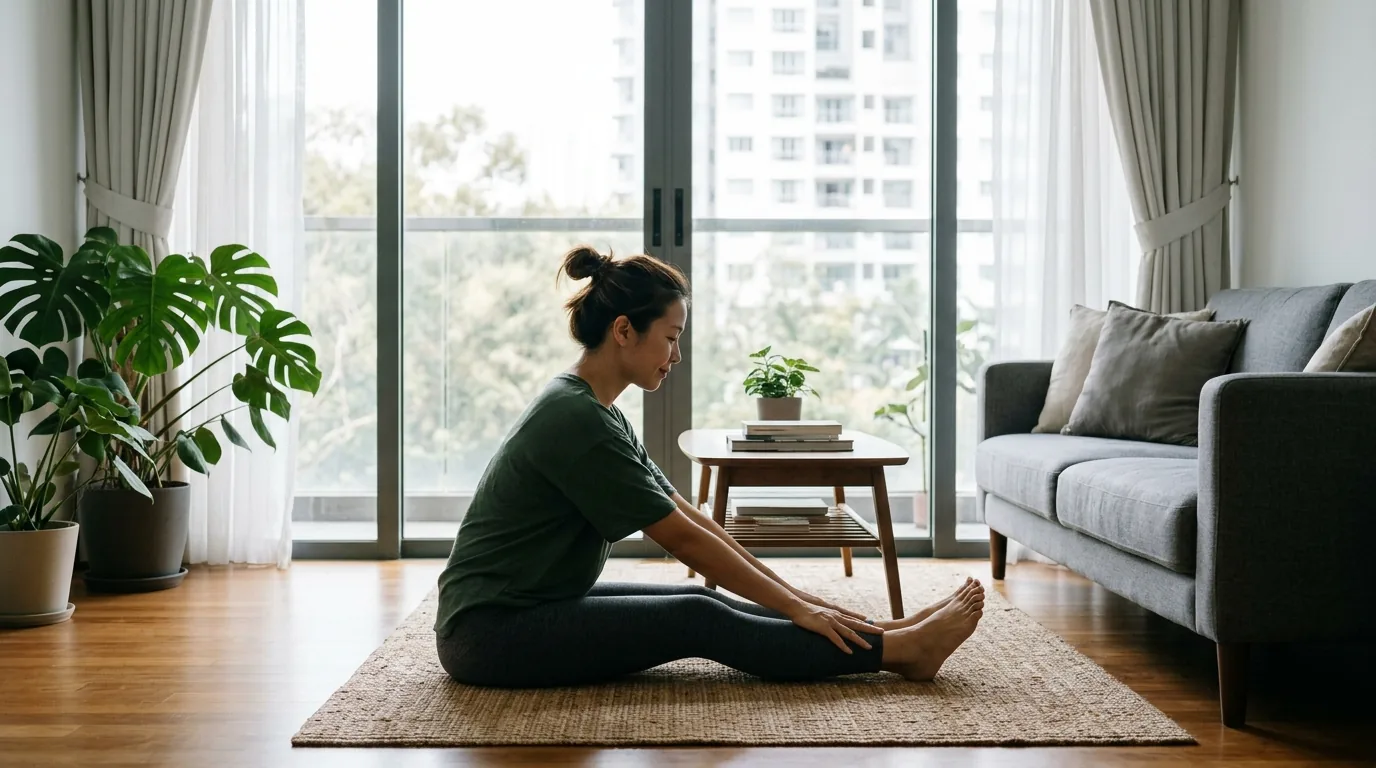
You had a jog around the park planned, then the sky opened and the afternoon storm rolled straight into the evening. It happens often in Kuala Lumpur, and it doesn't have to mean skipping exercise altogether. This guide gives you a calm, no-equipment routine of 20 to 30 minutes that fits into a small condo living room and keeps the thuds and bangs to a minimum, so the family downstairs stays happy. You'll find a simple warm-up, a quiet main circuit, a cool-down, and practical tips for adjusting the session so it suits your body and your space.
Set up your space first
You don't need much room, roughly the length of your body lying down and enough width to stretch your arms out. Spend a couple of minutes getting ready:
- Clear the floor of chairs, toys and anything you could knock over.
- Lay down a yoga mat, rug or folded towel to cushion your joints and soften sound.
- Switch on the fan or air-conditioning if you can, as KL evenings can feel humid after rain.
- Keep water and a small towel nearby.
- Set a timer on your phone so you aren't counting in your head.
It also helps to check your building's house rules on quiet hours. Many condos expect noise to drop in the late evening, so aim to finish your session at a reasonable hour.
A gentle five-minute warm-up
Warming up helps your body ease into movement, and every part of this one is silent. Spend about 30 to 45 seconds on each:
- Marching on the spot, lifting your knees gently and swinging your arms.
- Arm circles, forwards then backwards.
- Hip circles with your hands on your waist.
- Shoulder rolls and gentle neck turns, moving slowly and never forcing.
- Bodyweight good mornings: hands on hips, hinge forward from the hips with a flat back, then stand tall.
- Side steps, stepping wide left and right with a slight bend in the knees.
By the end you should feel a little warmer and looser, not out of breath. If anything feels stiff, give it a few more slow repetitions before moving on.
The quiet main circuit
This circuit uses no jumping at all. Do each move for about 40 seconds, rest for 20 seconds, then move to the next. One round takes around seven minutes; aim for two or three rounds with a minute's break between them.
- Slow squats: lower for three counts, rise for one.
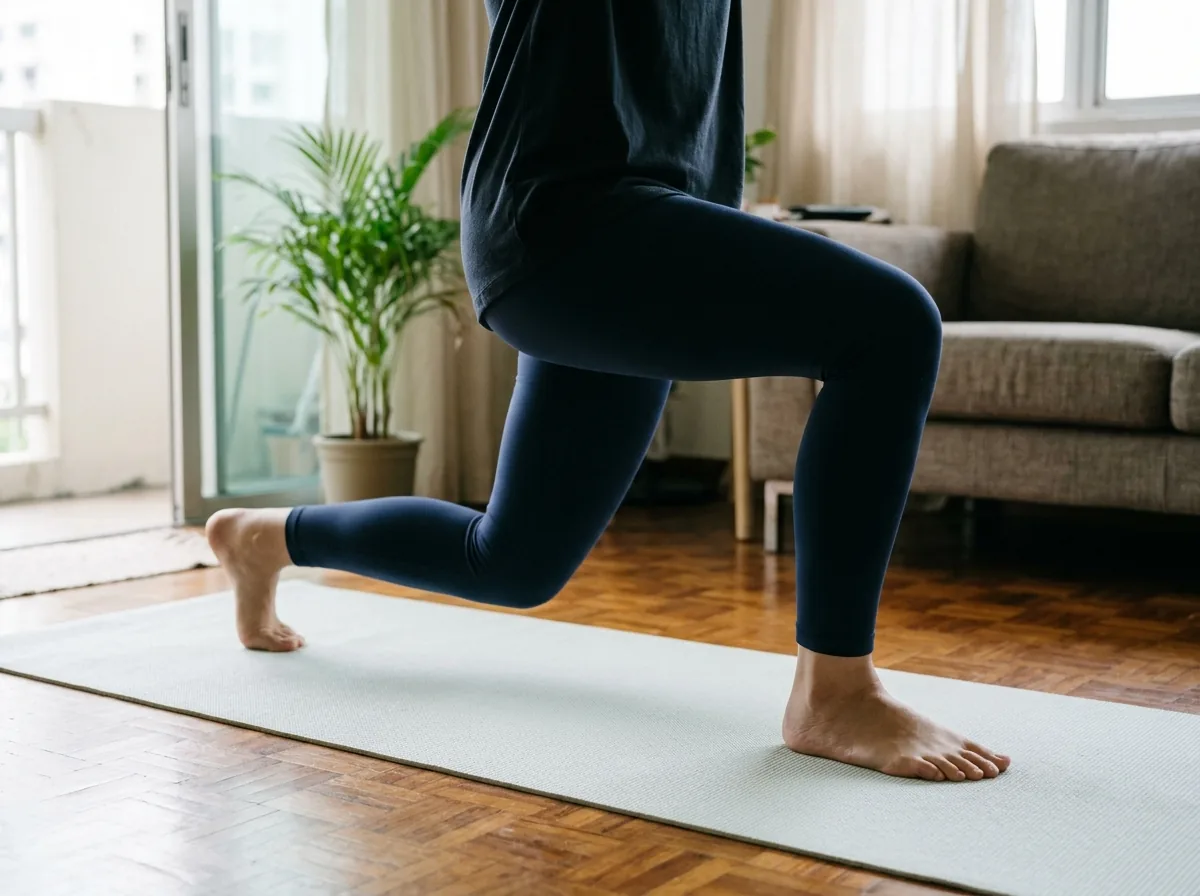
- Reverse lunges: step back softly, alternating legs.
- Incline push-ups against a kitchen counter, sturdy table or wall.
- Glute bridges: lie on your back, feet flat, lift and lower your hips.
- Bird dog: on hands and knees, extend the opposite arm and leg, then switch.
- Wall sit: back against the wall, knees bent, hold steady.
- Forearm plank: hold a straight line from head to heels, or drop to your knees.
Move with control rather than speed. Slower movements are quieter and often feel more challenging.
Keeping the noise down
Most complaints about home workouts come from impact, so the main trick is to keep at least one foot on the floor at all times. A few more habits help:
- Skip jumping moves such as burpees, jump squats and skipping. Swap them for slow squats or step-back lunges.
- Land softly by stepping, not stamping, and keeping your knees slightly bent.
- Work on a rug or mat rather than bare tiles, which carry sound easily.
- Go barefoot or wear soft-soled shoes; socks alone can slip on smooth floors.
- Keep music low or use earphones, especially with thin walls or shared corridors.
- Avoid dragging furniture mid-session by setting up beforehand.
If you're on good terms with your neighbours, a quick friendly chat can also clear up any worries before they become a problem.
Cool down and stretch
Give yourself five minutes at the end to let your breathing settle. Hold each stretch for around 20 to 30 seconds, breathing slowly, and ease off if anything feels sharp.
- Standing quad stretch: hold a wall or chair for balance and bring one heel towards your backside.
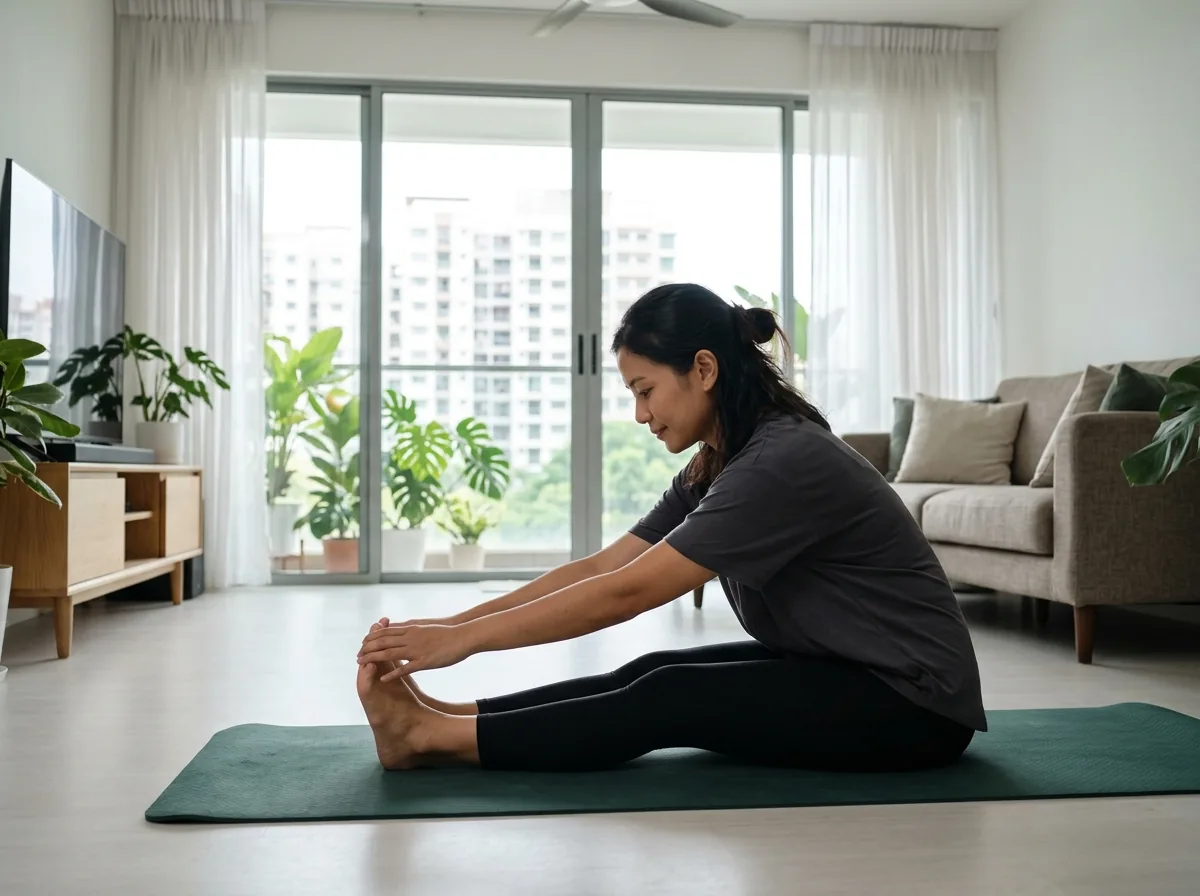
- Hamstring stretch: sit with one leg straight, the other bent, and reach gently towards your toes.
- Child's pose: kneel, sit back on your heels and stretch your arms forward on the mat.
- Chest opener: clasp your hands behind your back and lift your chest.
- Figure-four stretch: lying down, cross one ankle over the opposite knee and draw your legs gently towards you.
Finish with a few deep breaths lying on your back. It's a calm way to round off the evening while the rain carries on outside.
Make it work for your body
Everyone starts from a different place, so adjust freely:
- To make it easier, shorten each move to 30 seconds, take longer rests, do one or two rounds, and use a higher surface for push-ups.
- To make it harder, slow every movement down further, add a pause at the bottom of squats and lunges, or try a single-leg glute bridge.
Listen to your body throughout. Mild effort and warm muscles are normal, but stop if you feel pain, dizziness, chest discomfort or unusual breathlessness. If you have a health condition, are recovering from an injury, are pregnant, or haven't exercised in a long time, it's wise to speak to a doctor before starting a new routine. They can give you guidance that fits your own situation.
Turn rainy evenings into a habit
The easiest way to stick with this is to decide in advance that rain means your indoor routine, not a night off. A few ideas help it feel automatic:
- Keep your mat somewhere visible, such as rolled up beside the sofa.
- Write the circuit on a sticky note or save it in your phone notes.
- Pair it with something you enjoy, like a favourite playlist or a warm shower afterwards.
- Invite a housemate or partner to join, if they'd like to; never pressure anyone.
- Note down each session so you can see your consistency build over the weeks.
During the monsoon months, when rain can come almost daily, having this ready means you can stay active without battling traffic or wet pavements. On clear evenings, head back outdoors and enjoy the change of scene.
Frequently asked questions
Is 20 to 30 minutes of exercise at home really worthwhile?
A short, consistent session is a useful way to stay active, especially on days when you'd otherwise do nothing. For guidance on how much activity suits your own health, a doctor is the best person to ask.
What time should I stop exercising so I don't disturb my neighbours?
Check your condo's house rules, as quiet hours vary between buildings. As a general courtesy, finishing before late evening and avoiding any impact moves keeps things considerate.
Can I do this workout on a tiled floor without a mat?
You can, but a rug, yoga mat or folded towel makes kneeling and lying moves more comfortable and helps dampen sound. Make sure whatever you use won't slide around.
Should I exercise right after dinner?
Many people find it more comfortable to wait a little while after a big meal before exercising. Try a light warm-up first and see how you feel, and speak to a doctor if you have any digestive or health concerns.
This is general information, not medical advice. Speak to a doctor before starting something new if you have a health condition. Something here wrong or out of date? Report a correction.