Johor Bahru Monsoon Haircare: Taming Frizz in Humid Weather
Advice · Published 30 October 2026
Reviewed and approved by a NearbyWise editor before publishing.
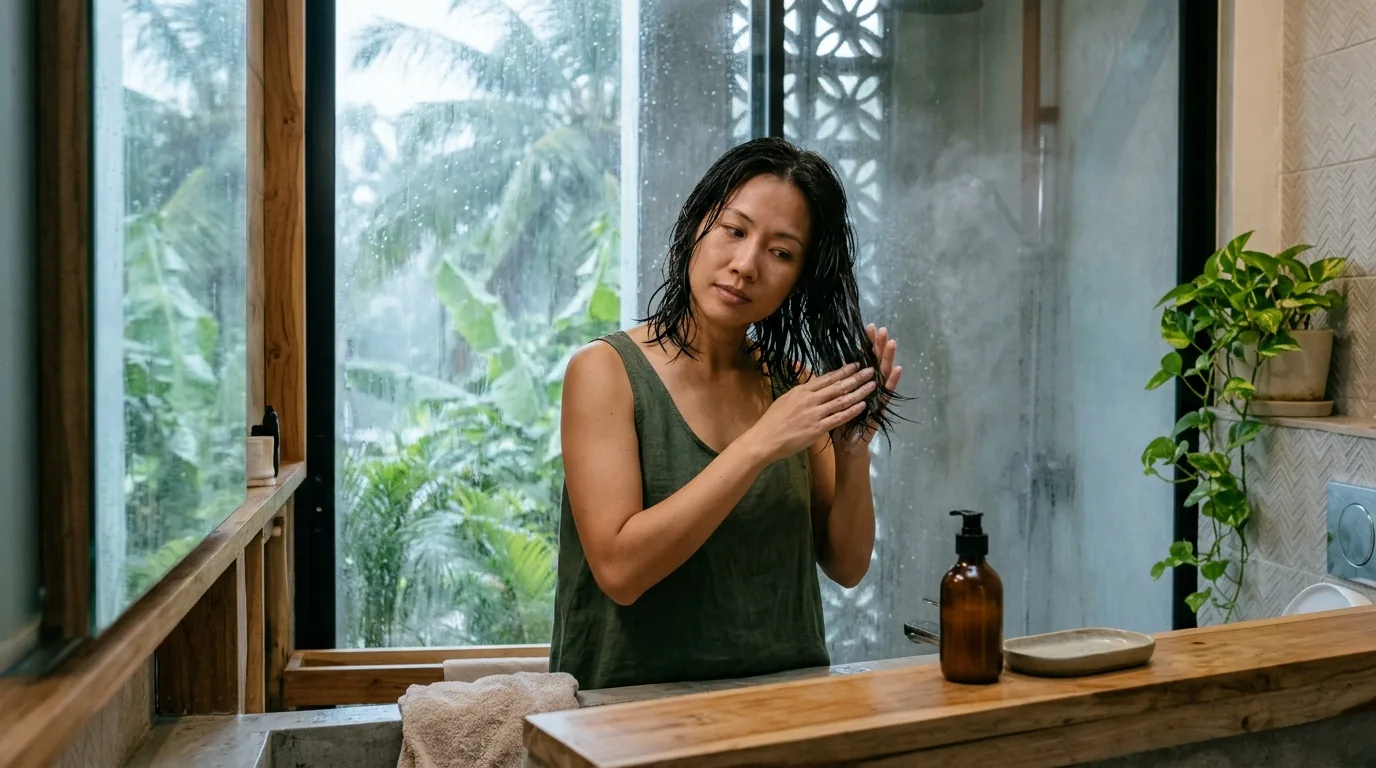
When the monsoon rolls into Johor Bahru, the air turns thick and the afternoon downpours become part of daily life. For many people, that means hair that puffs up, loses its shape or never quite feels dry. Whether your hair is straight, wavy, curly or coily, a few small changes to how you wash, dry and style it can make wet-weather days far easier to manage. This guide covers practical habits you can build into your routine, from your shower to your commute, so you spend less time fighting your hair and more time getting on with your day.
Why humid weather unsettles your hair
Hair naturally takes in moisture from the air around it. On muggy monsoon days, strands that are dry or slightly roughened tend to absorb that moisture unevenly, which is why some sections swell and lift while others stay flat. The result is the familiar halo of frizz, or waves and curls that suddenly lose their definition.
Understanding this helps you focus on the right goals:
- Keep hair well conditioned, so it is less inclined to grab moisture from the air.
- Handle it gently, so the outer surface stays as smooth as possible.
- Work with your texture, rather than forcing a style that humidity will undo within the hour.
None of this needs expensive kit. It is mostly about consistent, gentle habits that suit the weather outside your window.
Washing habits for wet weeks
It can be tempting to wash more often when you feel sticky, but frequent harsh washing can leave hair drier and more prone to frizz. Many people find a gentler rhythm works better during the monsoon.
- Use lukewarm rather than very hot water, which can feel kinder to your hair and scalp.
- Focus shampoo on your scalp, letting the lather rinse through your lengths rather than scrubbing them.
- Never skip conditioner, especially on the mid-lengths and ends.
- Detangle while conditioner is in, using a wide-tooth comb and working up from the ends.
If your scalp feels oily but your ends feel dry, you might try rinsing with water or using a light conditioner on in-between days. Notice how your hair responds over a week or two and adjust from there.
Drying without adding frizz
How you dry your hair can matter as much as what you put on it. Rough towelling is one of the most common causes of frizz, because rubbing lifts and roughens the strands.
Instead, try this:
- Squeeze or blot water out with a soft cotton T-shirt or microfibre towel.
- Apply your leave-in products while hair is still damp, not soaking or fully dry.
- Air-dry where you can, ideally under a fan or in an air-conditioned room where the air is less humid.
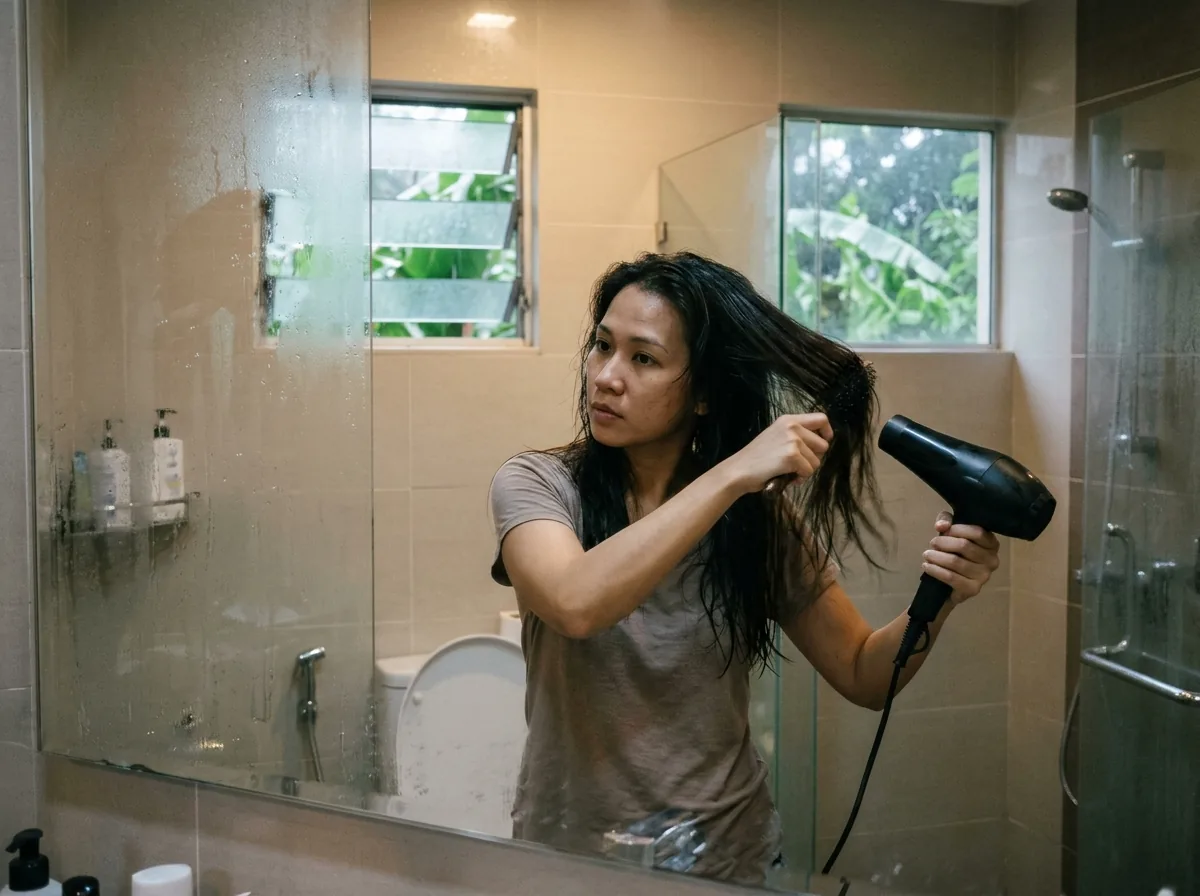
- If you blow-dry, use a medium heat, point the nozzle down the hair shaft and finish with a cool blast.
On very humid days, hair can stay damp for hours. Make sure it is fully dry before tying it up tightly or heading to bed, as damp hair left bundled up can feel musty and tangle easily.
Styles that hold up in the rain
Some styles simply cope better with humidity than others. Rather than battling for a sleek blow-dry that disappears the moment you step outside, consider styles that look intentional even if a little moisture creeps in.
- Braids and plaits keep hair contained and often look better as the day goes on.
- Low buns, twisted chignons and claw-clip styles are quick and forgiving.
- Defined curls or waves set with a cream or gel can hold their shape well if left undisturbed while drying.
- Headscarves, tudung and hats can protect your style; a smooth inner layer may help reduce friction.
Try to avoid touching your hair once it is styled, as fiddling breaks up the shape and invites frizz. Keeping a few spare hair ties and clips in your bag gives you an easy backup plan.
Choosing products for humid weather
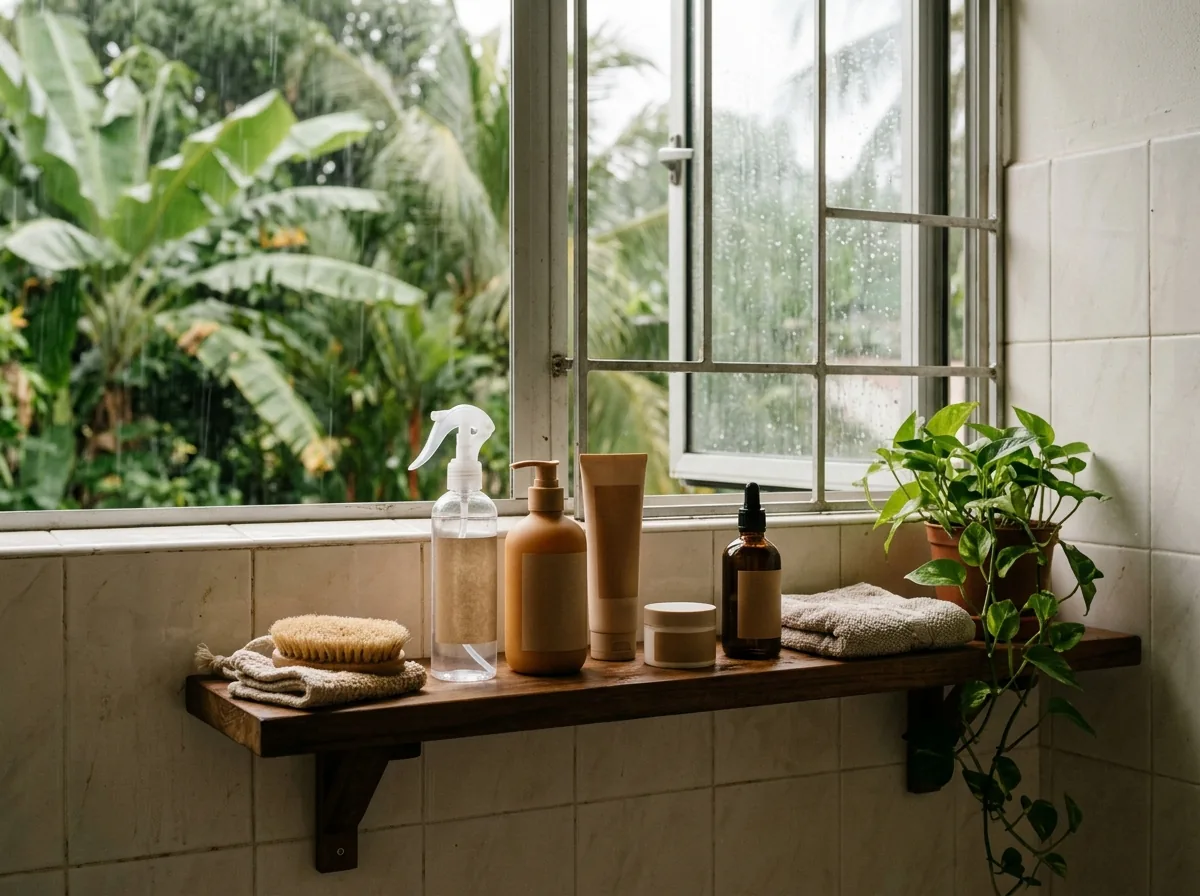
You don't need a shelf full of products, but a small, well-chosen line-up can help. When browsing at a pharmacy or beauty shop, read labels and think about your hair type.
- Leave-in conditioner adds moisture and slip, useful for most textures.
- Light serums or oils can smooth the surface; use just a few drops on the ends.
- Anti-humidity or frizz-control sprays are designed to sit on the hair's surface.
- Creams and gels suit curls and waves, helping clumps hold together.
Fine hair usually prefers lighter formulas, while thick or coily hair may welcome richer ones. Introduce one new product at a time so you can tell what is helping. If anything makes your scalp itchy or uncomfortable, stop using it.
Getting caught in a downpour
Sudden afternoon storms are part of monsoon life in Johor Bahru, and you won't always reach shelter in time. A little preparation makes these moments less stressful.
- Carry a compact umbrella in your bag or car throughout the season.
- Pack a small kit: a wide-tooth comb, hair ties, a clip and a travel-sized leave-in or serum.
- If your hair gets soaked, blot it gently with a tissue or scarf rather than rubbing.
- Twist or braid wet hair loosely if you can, so it dries with some shape rather than in tangles.
If you have a long commute on public transport or walk between buildings, a lightweight hooded jacket can be more practical than an umbrella in windy weather. Once home, rinse rainwater out if your hair feels grimy, then condition as usual.
Air-conditioning, sleep and daily care
Moving between steamy streets and chilly, air-conditioned offices or malls can leave hair feeling confused: damp one minute, dry the next. A few everyday habits help it cope.
- Keep a small bottle of leave-in or a hydrating mist at your desk for dry ends.
- Sleep on a satin or silk pillowcase, or loosely wrap your hair in a scarf or bonnet, to reduce overnight friction.
- Tie hair loosely at night rather than in tight elastics that can crease or snag.
- Trim split ends regularly, as damaged tips tend to frizz more easily.
It also helps to be patient with yourself. Humidity affects almost everyone's hair, and a relaxed, protective style is a perfectly good choice on a rainy day.
When to seek extra advice
Frizz is a normal response to humid weather, but sometimes changes to your hair or scalp are worth a closer look. Damp conditions can leave the scalp feeling uncomfortable, especially if hair stays wet for long periods under a hat or scarf.
Consider speaking to someone if you notice:
- Persistent itching, flaking or redness on your scalp.
- Unusual hair shedding or patches that concern you.
- Soreness or irritation after using a product.
For anything like this, a doctor or a pharmacist is a sensible first stop, and they can suggest whether you need to see a specialist. For styling and cutting questions, a hairdresser you trust can look at your hair in person and suggest a cut or routine that suits both your texture and the season.
Frequently asked questions
Should I wash my hair every day during the monsoon season?
Not necessarily. Many people find that washing less often, with gentle shampoo focused on the scalp and plenty of conditioner, keeps hair less dry and frizzy, but it depends on your hair and how active you are.
Is it better to air-dry or blow-dry in humid weather?
Both can work. Air-drying under a fan or in an air-conditioned room is gentle, while blow-drying on medium heat with the nozzle pointing down the hair can give a smoother finish; just make sure hair is fully dry before tying it up.
What can I do if my hair gets soaked in the rain?
Blot it gently rather than rubbing, then comb through with a wide-tooth comb and twist or braid it loosely so it dries with some shape. Carrying a small kit with a comb, hair ties and a leave-in product makes this easier.
Do I need special products for humid weather?
You don't need many, but a leave-in conditioner and a light serum or frizz-control spray suited to your hair type can help. Introduce new products one at a time and stop using anything that irritates your scalp.
This is general information to help you plan. Something here wrong or out of date? Report a correction.