Eating Cheaply in Johor Bahru: Good Meals on a Small Budget
Advice · Published 24 October 2026
Reviewed and approved by a NearbyWise editor before publishing.
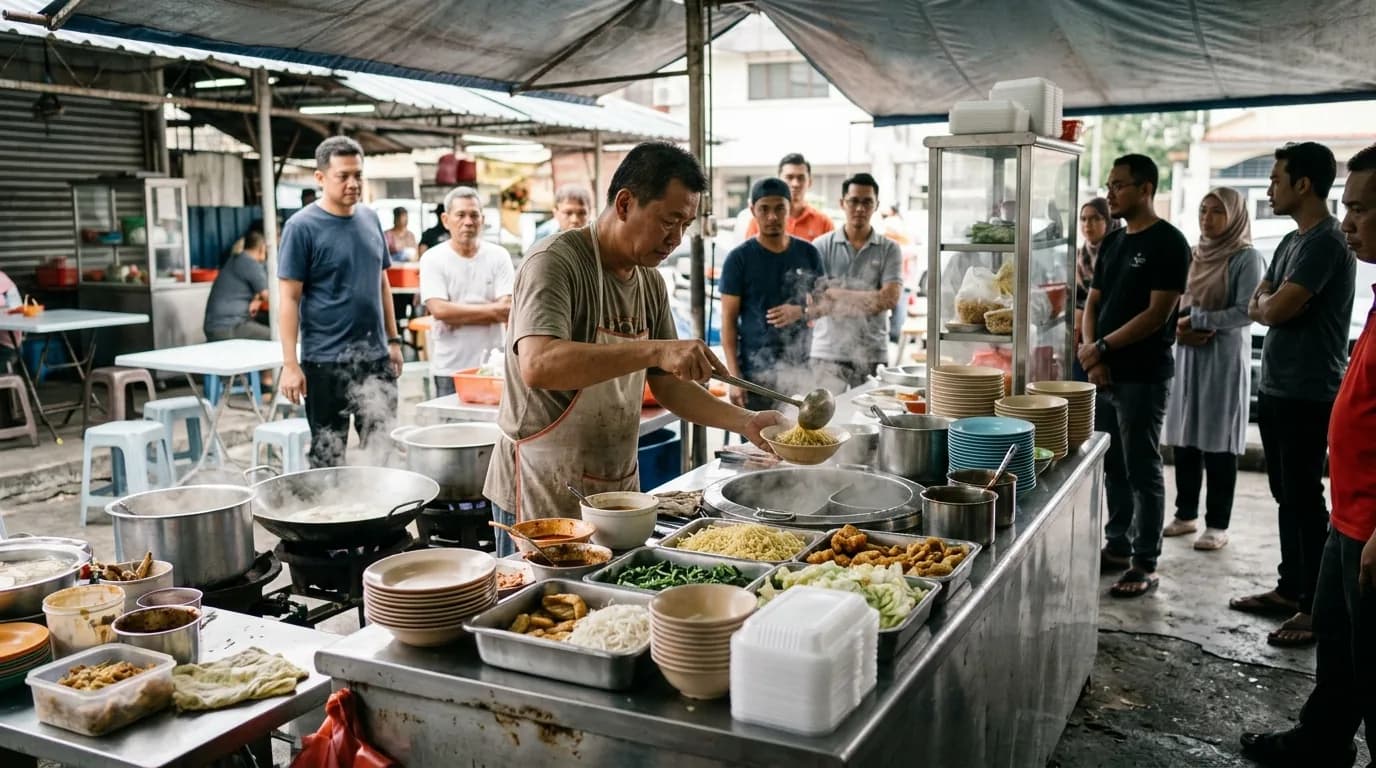
Johor Bahru has a well-earned reputation for good, filling food that doesn't drain your wallet, but prices shift from street to street and year to year. If you've ever paid for a plate of rice and wondered whether that was fair, you're not alone. This guide won't give you a fixed price list, because any figure printed here could be out of date by the time you read it. Instead, it shows you how to read menus and stalls, where your money tends to stretch furthest, and the small habits that help you keep most meals under RM10 without feeling like you're missing out.
Why a normal price is hard to pin down
There isn't one standard price for a meal in JB. The same plate of noodles can cost noticeably different amounts depending on the neighbourhood, whether you're sitting in an air-conditioned mall or at an open-air stall, and how recently the vendor adjusted prices for rising costs. Your best tool is your own observation. Look at the price boards at a few stalls in the same area and you'll quickly get a feel for the local going rate. If one stall is far above the rest for a similar dish, there's usually a reason, such as larger portions or extra toppings. Treat RM10 as a personal target rather than a promise. In many residential areas you'll find plenty of options within it; in busier tourist spots, you may need to be a little choosier.
Where your ringgit goes furthest
As a general pattern, the further you are from shopping malls and busy visitor areas, the more your money tends to buy. Places worth seeking out include:
- Hawker centres and open-air food courts in housing estates, where many stalls compete side by side
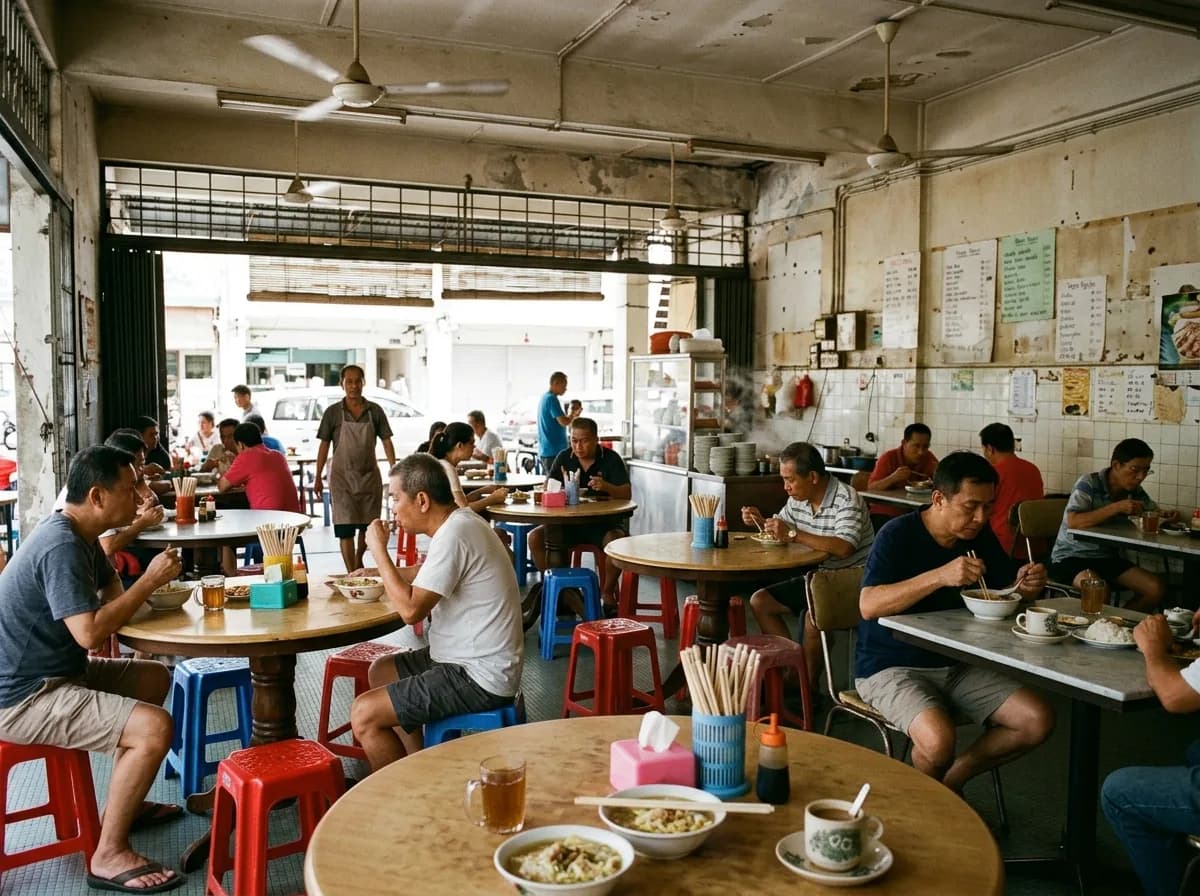
- Kopitiams (traditional coffee shops) with several vendors under one roof
- Mamak stalls, often open late and handy for a quick plate of roti or rice
- Morning and night markets, where you can buy ready-to-eat snacks and meals to take away
Mall food courts are comfortable and convenient, but rent and air-conditioning costs often show up in the price. If you work or study near a mall, it can be worth a short walk or bus ride to a neighbourhood food court for your regular lunches.
Getting the most from economy rice
Economy rice, known as nasi campur or chap fan, is one of the most flexible ways to eat on a budget. You choose rice and a selection of dishes from a counter, and the price is worked out based on what you pick. That flexibility is also where costs can creep up. A few tips help:
- Meat and seafood usually cost more than vegetable, egg or tofu dishes, so balance one pricier item with simpler ones
- Ask before you pay if there's no price list; a polite "Berapa?" is perfectly normal
- Ask for extra curry or gravy over your rice, which many vendors add without fuss and which makes a plate more satisfying
Once you've eaten at the same stall a few times, you'll learn roughly what your usual combination costs, which makes budgeting much easier.
Dishes that tend to stay within budget
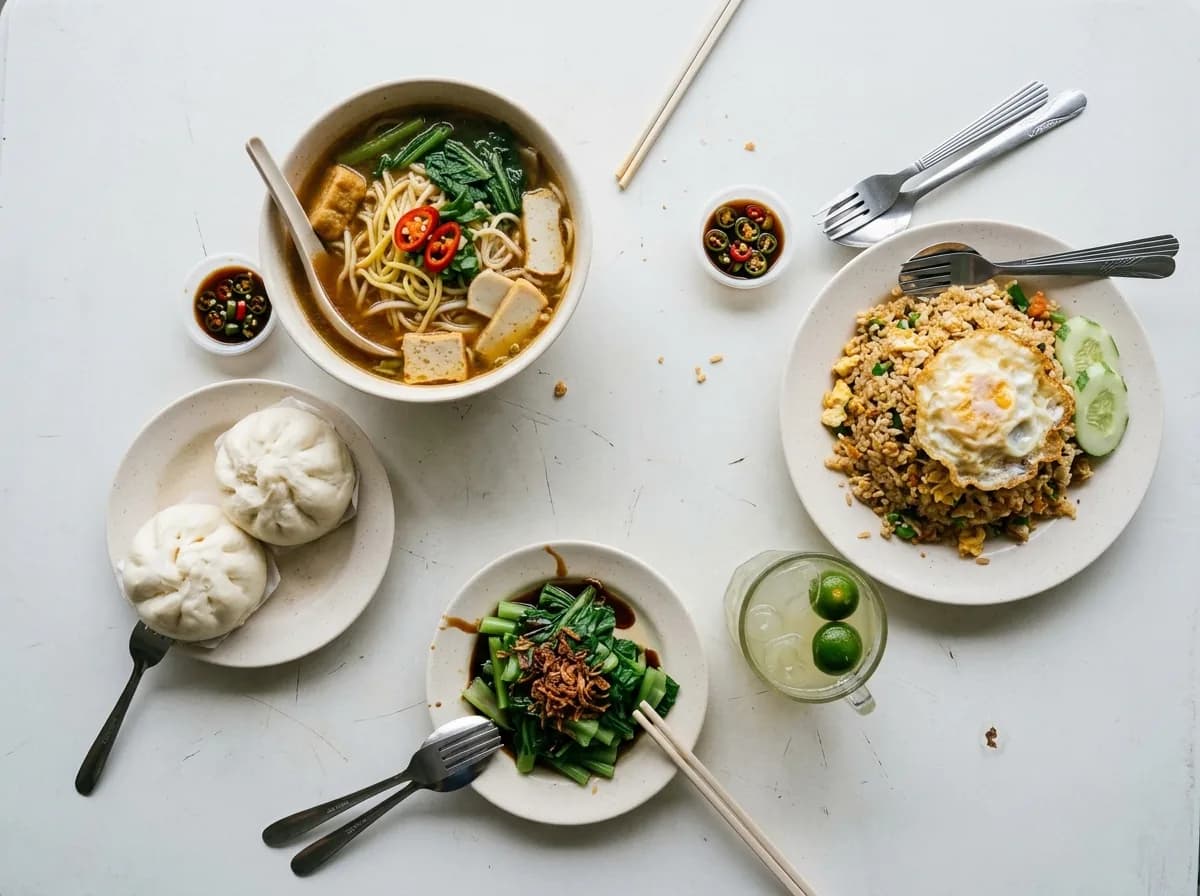
Some dishes are traditionally simple and often sit at the more affordable end of a stall's menu. Good ones to look out for include nasi lemak wrapped in paper, roti canai or roti telur, plain noodle soups, fried rice or fried noodles without premium toppings, and kuih from market stalls for a light bite. Prices for each still vary by vendor, so glance at the board first. Toppings are where a cheap dish can become a pricier one. Adding fried chicken, prawns or an extra egg is often charged separately, so decide whether the add-on is really worth it. A good approach is to order the basic version first; if you're still hungry, a second small item can sometimes cost less than one heavily loaded plate.
Drinks and extras that quietly add up
Many people keep their food spending tight, then find their total creeping up because of everything around the meal. Watch for these:
- Drinks: iced versions are sometimes priced higher than hot ones, and canned or bottled drinks often cost more than freshly made teh or kopi. Plain water is frequently the cheapest choice, so ask what's available
- Takeaway charges: some stalls add a small amount for containers or bags, so bringing your own container can help
- Service charge and tax at sit-down restaurants, which may not be shown in the menu price
- Side dishes and sauces that are added automatically
None of these is large on its own, but across a week they can make the difference between staying under RM10 a meal and going over.
Timing, location and the visitor effect
JB is busy with day-trippers, especially near the Causeway and the city centre, and stalls in those areas may price with visitors in mind. That's not unfair, it's simply business, but if you live locally you'll often find better value a little further out. Timing matters too. Some markets and stalls sell off remaining food towards closing time, and you may find vendors happy to offer a little more on your plate or a small discount, though this is never guaranteed and it's polite not to push. Breakfast and lunch stalls in residential areas tend to be aimed at regular local customers, so they're often a reliable choice. Weekends and public holidays can bring bigger crowds, longer waits and occasionally different prices, so a weekday meal is often the easier option.
Cooking and planning to stretch further
Eating out cheaply is part of everyday life in JB, but mixing in some home cooking gives you even more room in your budget. Wet markets and night markets are useful for buying vegetables, eggs and basics, and you can compare prices between stalls before buying. Simple habits help:
- Cook in batches of rice, soup or stir-fries and keep portions for the next day
- Pack lunch a few days a week and eat out on the others
- Keep a simple note of what you spend on food for a week or two, so you know your real average
If you're finding it genuinely difficult to afford enough to eat, you don't have to manage alone. Local community groups, religious organisations and welfare services can often point you towards support, and asking is nothing to be embarrassed about.
Frequently asked questions
Is it still possible to eat for under RM10 in Johor Bahru?
For many everyday meals, yes, especially at hawker centres, kopitiams and neighbourhood stalls away from malls and busy visitor areas. Prices vary, so check boards and compare a few stalls in the same area.
How do I know if I'm being charged fairly at an economy rice stall?
Look at what other customers with similar plates seem to pay, and simply ask the price before paying if nothing is displayed. Over a few visits you'll learn roughly what your usual choices cost.
Are mall food courts more expensive than hawker centres?
Often, though not always, because malls have higher running costs that can be reflected in prices. They're convenient, but neighbourhood food courts are usually worth comparing for regular meals.
What's the easiest way to cut my daily food spending?
Watch the extras, such as drinks, add-on toppings and takeaway charges, which often add up more than the main dish. Packing lunch a few days a week also makes a noticeable difference to your weekly total.
This is general information to help you plan. Something here wrong or out of date? Report a correction.