Wildfire Evacuation Plan for Pets in Los Angeles
Advice · Published 19 October 2026
Reviewed and approved by a NearbyWise editor before publishing.
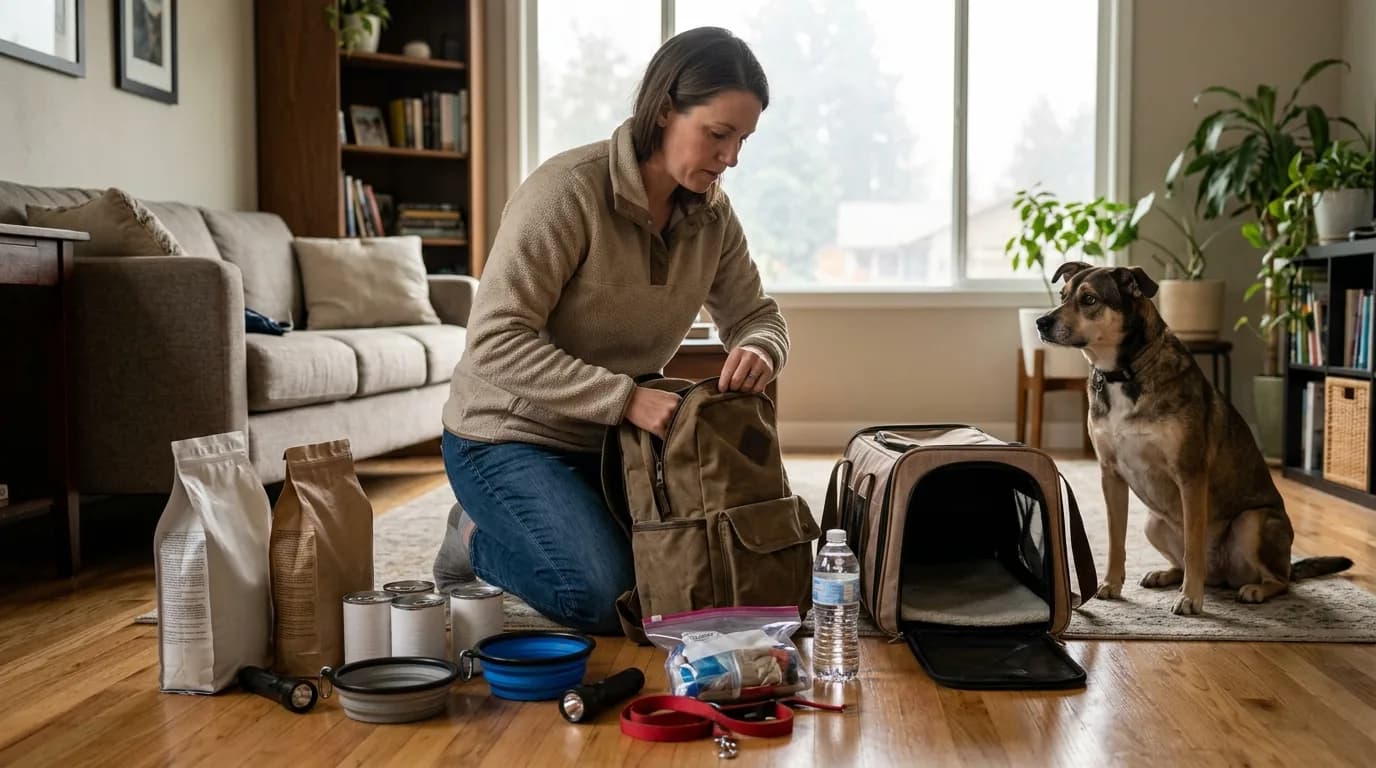
When a wildfire moves toward your neighborhood in Los Angeles, the time you have to leave can shrink fast, especially when Santa Ana winds pick up. If you share your home with a dog or cat, the last thing you want is to be hunting for a carrier while smoke drifts over the hills. A little preparation now turns a frantic scramble into a calm, practiced routine. This guide walks you through building a pet go-bag, getting carriers and crates ready, rehearsing a quick exit and figuring out where you and your animals can go when an evacuation warning or order arrives.
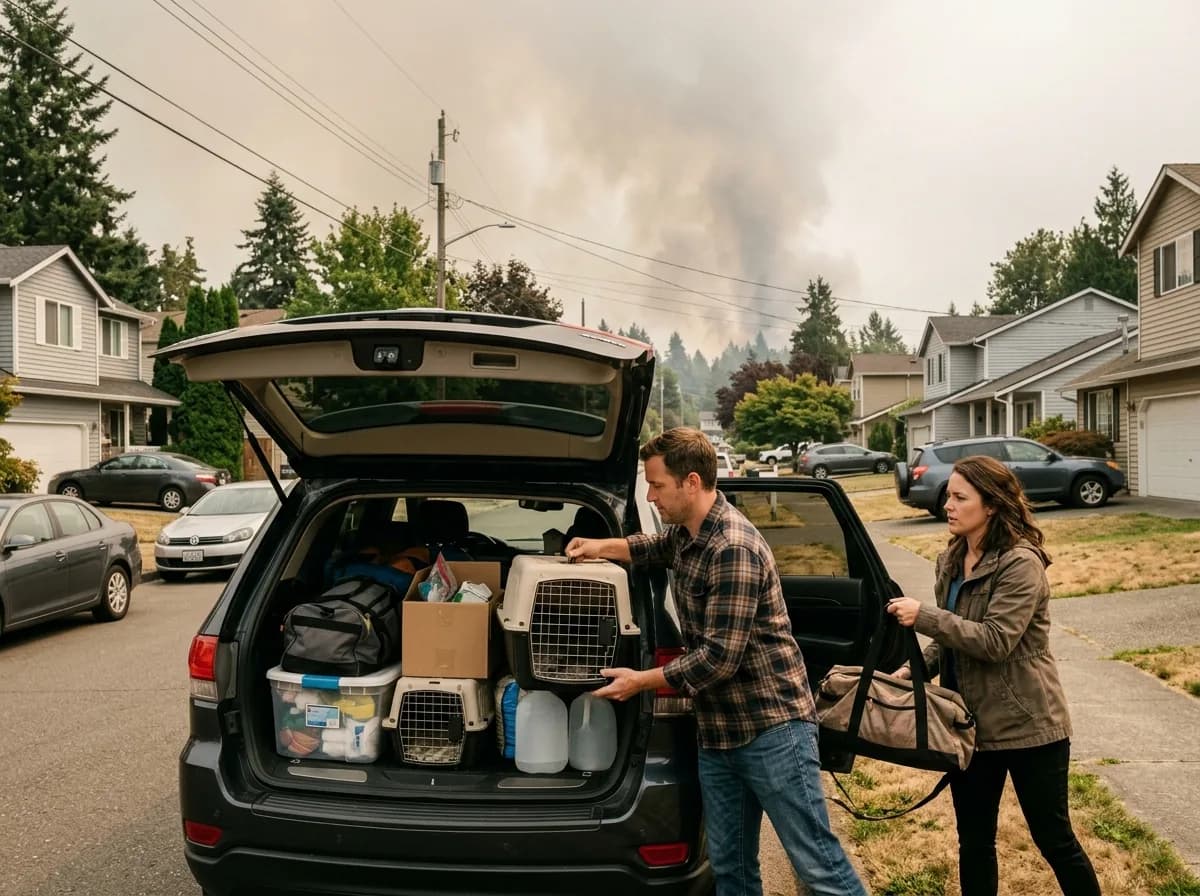
Know the Warnings and Leave Early
Fire officials typically use two levels of alerts: an evacuation warning, which means danger is possible and you should get ready, and an evacuation order, which means leave now. With pets, treat a warning as your cue to go. Animals take longer to load, they sense your stress, and roads can clog quickly. To stay ahead:
- Sign up for your city or county emergency alerts and keep your phone charged.
- Know at least two routes out of your neighborhood, since one may close.
- Keep your car's gas tank at least half full during fire season.
- Bring pets indoors when smoke appears or winds rise, so you're not searching for a cat hiding in the yard.
Never leave pets behind expecting to return in a few hours. Once an area is closed, you may not be allowed back in for days.
Pack a Pet Go-Bag
Keep a dedicated bag for each pet near your front door or in your car, so you can grab it in seconds. A sturdy backpack or plastic bin works well. Include:
- Food and water for about a week, plus collapsible bowls and a can opener if needed.
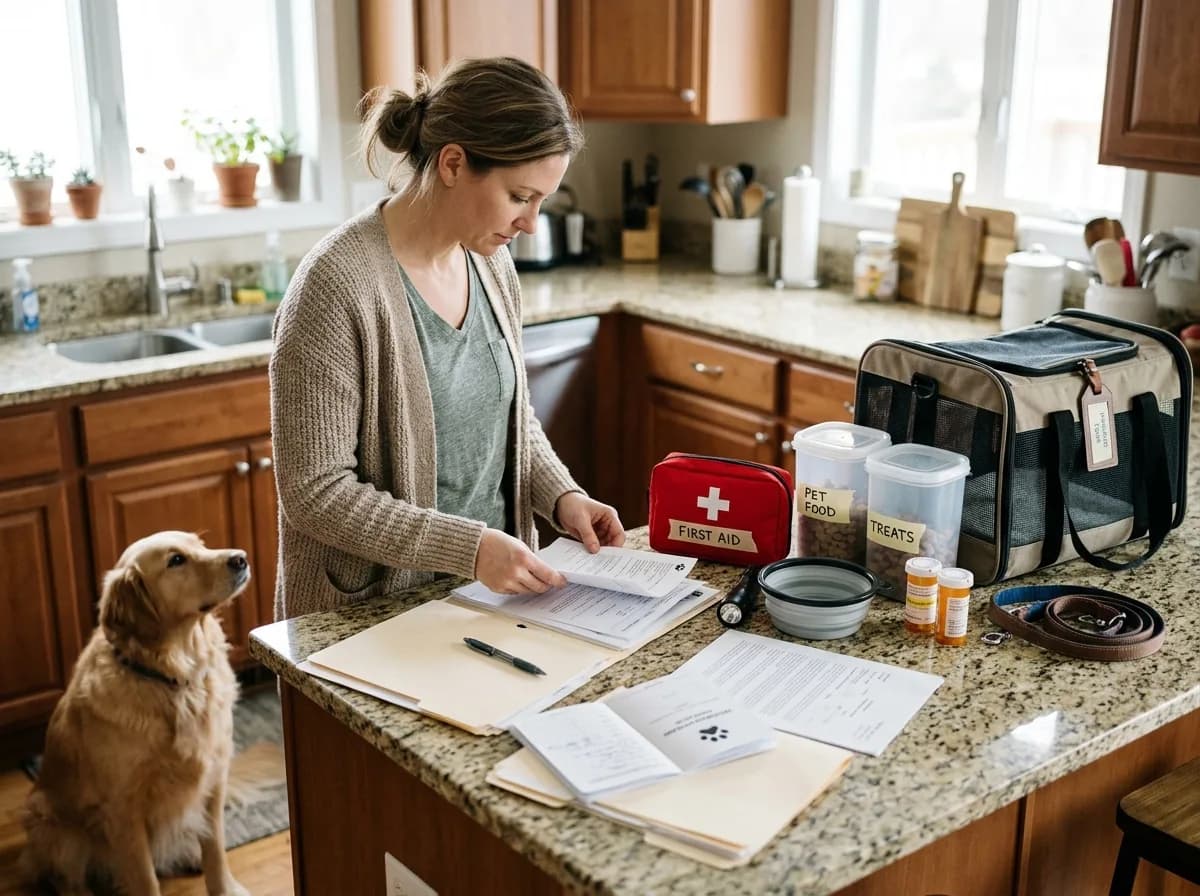
- Medications in their original labeled containers, with a written list and your vet's contact information.
- Records: vaccination history, microchip number and a recent photo of you with your pet to prove ownership.
- Leash, harness and spare collar with ID tags.
- Cat litter, a small disposable litter tray and scoop.
- Waste bags, paper towels and a small cleaning spray.
- A familiar blanket or toy for comfort.
Store digital copies of records in your phone or cloud storage too. Check the bag every few months and swap out food and medications before they expire.
Get Carriers and Crates Ready
A secure carrier is often the difference between a smooth exit and a pet bolting in panic. Every cat and small dog should have its own hard-sided carrier, labeled with the pet's name and your phone number. Larger dogs need a crate that fits in your vehicle, or at minimum a well-fitted harness and seatbelt attachment.
The key is familiarity. If your cat only sees the carrier before a vet visit, it may vanish under the bed the moment you pull it out. Leave carriers open in your living space with a soft towel and occasional treats inside, so they become a normal resting spot. Keep a pillowcase on hand as a backup for cats; in an emergency, it can help you contain a frightened cat long enough to place it in a carrier. Make sure doors latch firmly and handles are sturdy.
Practice a Fast Exit
A plan you've never rehearsed tends to fall apart under pressure. A couple of times a year, run a drill: set a timer and see how long it takes to find every pet, load them into carriers, grab go-bags and get everyone into the car. You may discover that your cat's favorite hiding spot is behind the dryer or that the dog crate doesn't fit with the seats up.
Write a simple checklist and tape it inside a cabinet door, so anyone in your household can follow it. Assign roles: one person handles animals, another grabs bags and documents. If you have several pets, decide in advance who goes in which carrier and where each one rides in the car. Practicing also helps your animals, since a car ride becomes less of a shock when it isn't brand new.
Where You Can Go With Pets
Figure out your destinations before fire season, not during it. Good options to line up:
- Friends or family outside your immediate area who are happy to host you and your animals. Ask now and offer the same in return.
- Pet-friendly hotels or motels in a few directions from home. Policies can change, so call ahead and keep a short list saved on your phone.
- Emergency evacuation shelters, which in many cases have a separate area for pets or can point you to one. Bring carriers, since animals are often required to be contained.
- Local animal services or boarding facilities, which may take animals temporarily during major fires.
- Your vet's office, which may know of boarding options.
Follow official announcements and local news during a fire, since temporary animal shelters are often set up and shared through emergency channels.
Plan for When You're Not Home
Fires don't wait for you to finish work or get back from a trip. Arrange with a trusted neighbor to help evacuate your pets if you can't reach home, and do the same for them. Share a spare key, the location of carriers and go-bags, and your pets' usual hiding places. Give written permission for them to take your animals and to contact your vet.
A window or door sticker noting how many pets live inside can help responders, but update it or remove it if you leave with your animals, so no one wastes time searching. Make sure each pet's microchip is registered with your current phone number, and consider adding an out-of-area contact. If you and your pet are separated, that chip and a clear photo can make reuniting much easier.
Help Your Pet Settle After Evacuating
Even a well-planned evacuation is stressful for animals. Unfamiliar rooms, sounds and smells can make a calm dog restless or a confident cat withdrawn. Keep routines as steady as you can: regular feeding times, short walks on a leash and a quiet corner with a familiar blanket. Keep cats in their carrier or a closed room until things settle, since frightened pets may try to escape.
Watch for changes that worry you, such as coughing, trouble breathing, not eating, burns on paws or unusual lethargy, particularly after smoke exposure. Reach out to a veterinarian promptly rather than waiting it out. Look after yourself too; evacuating is hard, and your pet takes cues from your mood. If the experience leaves you shaken, talking with a counselor or a local support service can help.
Frequently asked questions
Can I bring my pet to a wildfire evacuation shelter in Los Angeles?
Many evacuation shelters make arrangements for pets, sometimes in a separate area, but setups vary by location and event. Bring a carrier or crate, food and records, and check official announcements for pet-friendly sites.
When should I leave with my pets during a wildfire?
Aim to leave when an evacuation warning is issued rather than waiting for an order. Loading animals takes extra time, and roads can become congested quickly.
What if my cat hides and I can't find it?
Practice ahead so you know your cat's hiding spots, and bring pets indoors as soon as smoke or high winds appear. If you truly cannot find your pet when an order comes, follow official instructions to leave and contact local animal services right away for help.
Do I need a separate carrier for each pet?
Yes, it's best to have one carrier per cat or small dog. Stressed animals may fight in close quarters, and separate carriers make transport and sheltering safer.
This is general information, not veterinary advice. If your pet seems unwell, see a vet. Something here wrong or out of date? Report a correction.