Ordering at a Mexican Panadería in LA: A First-Timer's Guide
Advice · Published 26 October 2026
Reviewed and approved by a NearbyWise editor before publishing.
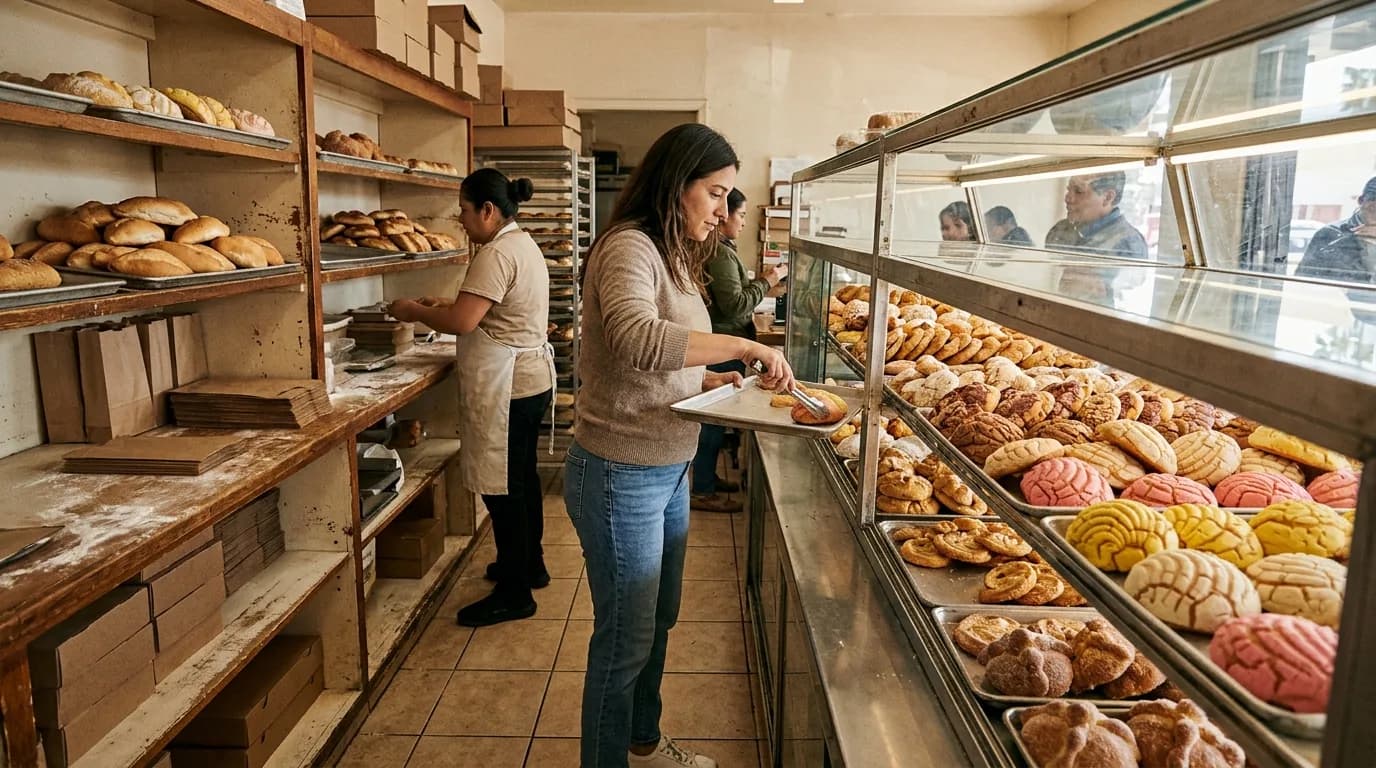
Walking into a Mexican panadería in Los Angeles for the first time can feel like stepping into a friendly ritual everyone else already knows. Glass cases and open racks are packed with colorful breads, people move with quiet purpose, and there's no menu board telling you what to do. The good news is that the routine is simple once you see it: grab a tray, pick with tongs, and pay at the counter. This guide walks you through each step, helps you put names to the most common breads, and introduces a few regional styles you might spot.
The Tray-and-Tongs Routine
Most panaderías work on a self-serve system. Near the entrance you'll usually find a stack of round metal or plastic trays and a container of tongs. Here's the basic flow:
- Take one tray and one pair of tongs. Hold the tray in one hand and the tongs in the other.
- Browse the cases or racks. Slide open the glass doors, choose what you want and close the door behind you to keep the bread fresh.
- Use the tongs, not your hands. Touching the bread directly is considered poor manners, even if you plan to buy that piece.
- Bring your tray to the counter. Staff will count your items, bag them and tell you the total.
If you see something behind the counter instead of on a rack, just point and ask. Watching a regular for a minute is a perfectly fine way to learn.
Paying and Counter Etiquette
Many neighborhood panaderías prefer cash, and some may not take cards at all, so it's smart to bring some small bills just in case. Others accept cards or mobile payments, but you won't always know until you reach the register. Having cash on hand saves you an awkward moment.
At the counter, set your tray down and let the staff do the bagging. They often wrap delicate pieces in paper or place sturdier breads in a bag or a pink box if you've chosen a lot. Leave the tongs and tray where the staff indicate, usually on the counter or in a return bin.
A simple "buenos días" or "gracias" is always welcome, but English is fine too. Patience goes a long way, especially on busy weekend mornings when lines can stretch toward the door.
Sweet Breads You'll See Everywhere
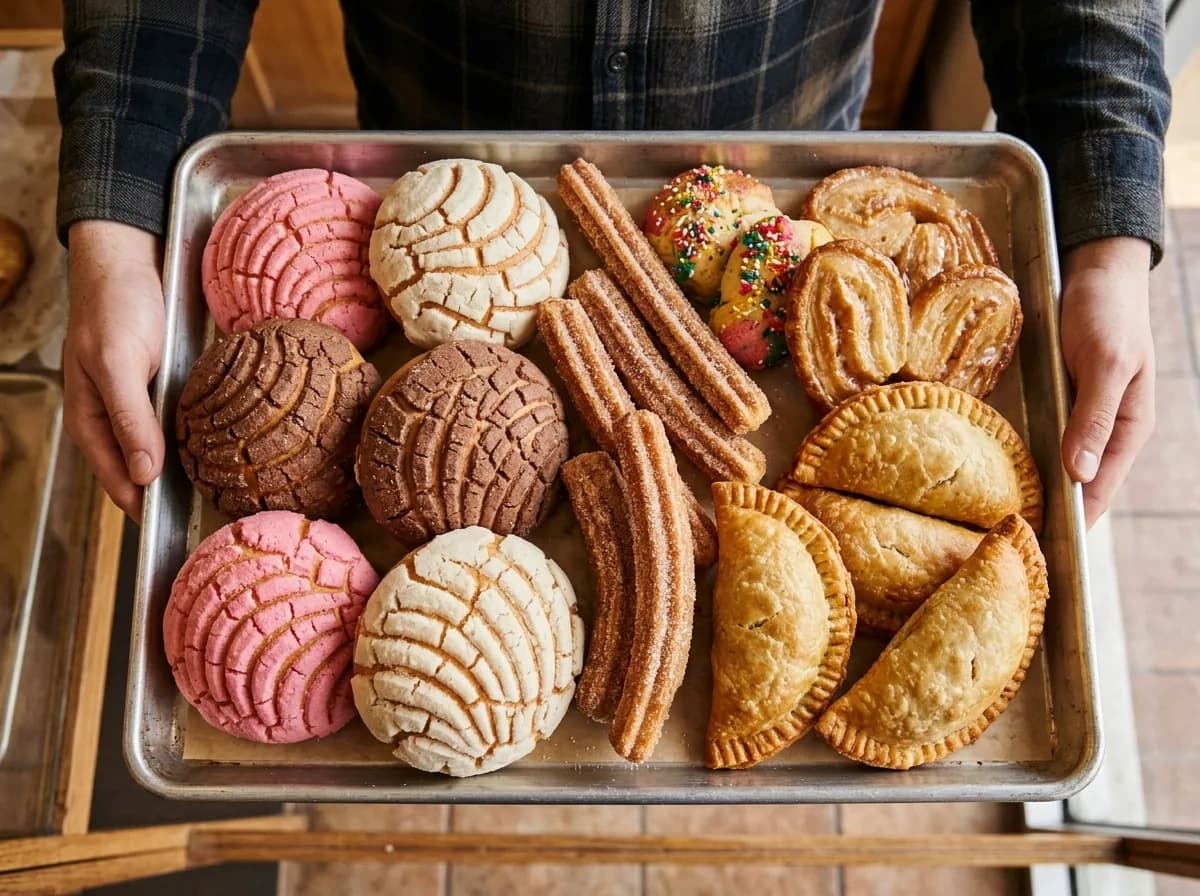
Pan dulce, or sweet bread, fills most of the cases. A few names will help you navigate:
- Conchas: Soft, round buns topped with a crackly sugar crust scored to look like a seashell. Toppings often come in vanilla, chocolate or pink.
- Cuernos: Crescent-shaped breads, sometimes plain, sometimes topped with sugar.
- Orejas: Flaky, ear-shaped pastries made from layered dough and caramelized sugar.
- Marranitos or puerquitos: Pig-shaped cookies-meets-bread, usually flavored with piloncillo, an unrefined cane sugar.
- Polvorones: Crumbly, shortbread-style cookies, sometimes in tricolor stripes.
- Empanadas: Folded pastries with sweet fillings such as pineapple, pumpkin or cream.
Don't worry about memorizing everything. Picking by sight is completely normal, and many shops label their shelves.
Savory Rolls and Everyday Breads
Not everything in a panadería is sweet. Look for the plainer rolls, often stacked in baskets or bins:
- Bolillos: Oval rolls with a crisp crust and a soft middle, a favorite for sandwiches or alongside a meal.
- Teleras: Flatter, rounder rolls with two grooves across the top, commonly used for tortas.
These are frequently sold in larger quantities, and some shops keep them behind the counter, so you may need to ask for them by number, such as "seis bolillos, por favor." They tend to go fast early in the day and again before dinnertime, so timing your visit can help if you're after a full bag.
If you're planning to make tortas at home, ask the staff which roll they'd suggest. They're usually happy to steer you toward the right one.
Regional Styles to Look For
Los Angeles is home to people from all over Mexico, and some panaderías reflect specific regional traditions. You might come across:
- Birote salado: A crusty, slightly tangy roll associated with Guadalajara, Jalisco, often used for tortas ahogadas.
- Pan de yema: A rich, egg-based bread linked with Oaxaca, sometimes served alongside hot chocolate.
- Coyotas: Thin, filled pastries from Sonora, often stuffed with piloncillo.
- Pan de pulque: A traditional bread from central Mexico.
A shop's specialty may hint at the owners' home region, so it's worth reading signs or simply asking, "¿Cuál es la especialidad de la casa?" Exploring different panaderías across the city is a fun way to taste the variety of Mexican baking traditions without leaving town.
Seasonal and Holiday Breads
Certain breads appear only at specific times of year, and they're a big part of the panadería calendar:
- Rosca de Reyes: A large, ring-shaped sweet bread decorated with candied fruit, enjoyed around January 6 for Día de Reyes. A small figurine is often baked inside, and tradition says whoever finds it hosts a gathering later.
- Pan de muerto: A round, soft bread topped with dough shaped like bones, made in the weeks around Día de los Muertos in late October and early November.
These breads can sell out quickly, especially larger sizes. If you want a whole rosca for a family gathering, consider ordering a few days ahead. Ask at the counter whether they take pre-orders and when you should pick it up.
Tips for a Smooth First Visit
A little preparation makes your first trip relaxed and enjoyable:
- Go in the morning for the widest selection, though many shops restock throughout the day.
- Bring cash in small bills as a backup.
- Start small. Try two or three different breads so you can discover your favorites.
- Ask questions. Staff are often glad to explain what something is or what it's filled with.
- Mention allergies. If you have a food allergy, ask about ingredients, since many breads share space and equipment.
- Carry carefully. Conchas and orejas can crumble, so hold the bag upright on the way home.
Pair your bread with coffee or hot chocolate at home, and you've got a simple, satisfying ritual you can return to again and again.
Frequently asked questions
Do I need to speak Spanish to order at a panadería?
No, many staff speak English, and the self-serve tray system means you can choose everything yourself. A friendly "gracias" is a nice touch but never required.
Can I touch the bread with my hands?
It's best not to. Always use the tongs provided so the bread stays clean for everyone.
Do panaderías accept credit cards?
Some do and some don't, and it varies from shop to shop. Carrying a little cash is the easiest way to avoid any trouble at the register.
How long does pan dulce stay fresh?
It's usually best on the day you buy it. Storing it in a closed bag or container can help it hold up a little longer, and a short warm-up in the oven can refresh a day-old piece.
This is general information to help you plan. Something here wrong or out of date? Report a correction.