Cut Your AC Bill in Abu Dhabi: Smart Cooling Habits
Advice · Published 20 October 2026
Reviewed and approved by a NearbyWise editor before publishing.
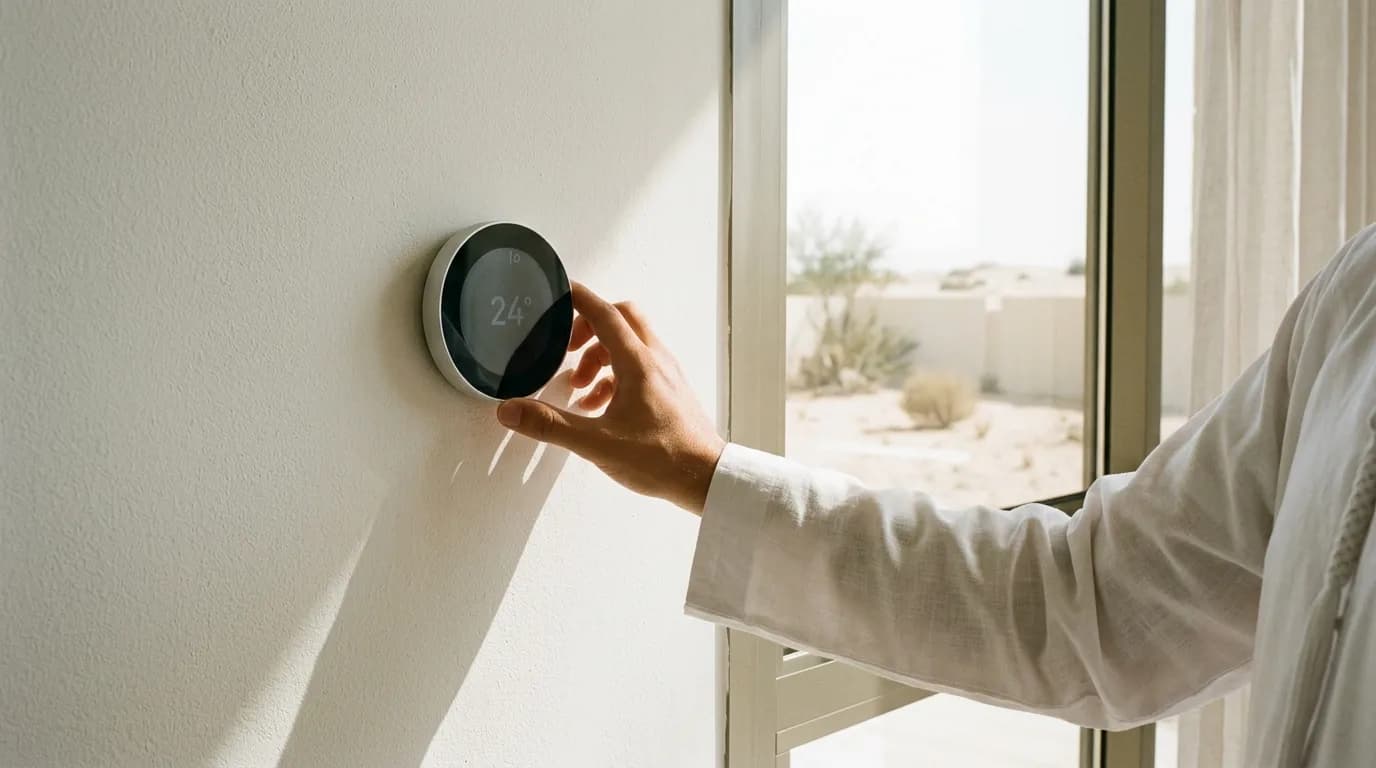
After months of the air conditioning running almost non-stop, the first cooler evenings in Abu Dhabi are a welcome chance to give your system, and your bill, a rest. You don't need to swelter to save. Small changes to how you set the thermostat, use fans, manage sunlight and look after your unit can add up over a month. This guide walks you through practical habits that suit villas and apartments alike, whether you control your own system or share a building's chilled water supply. Most take a few minutes to start and cost little or nothing.
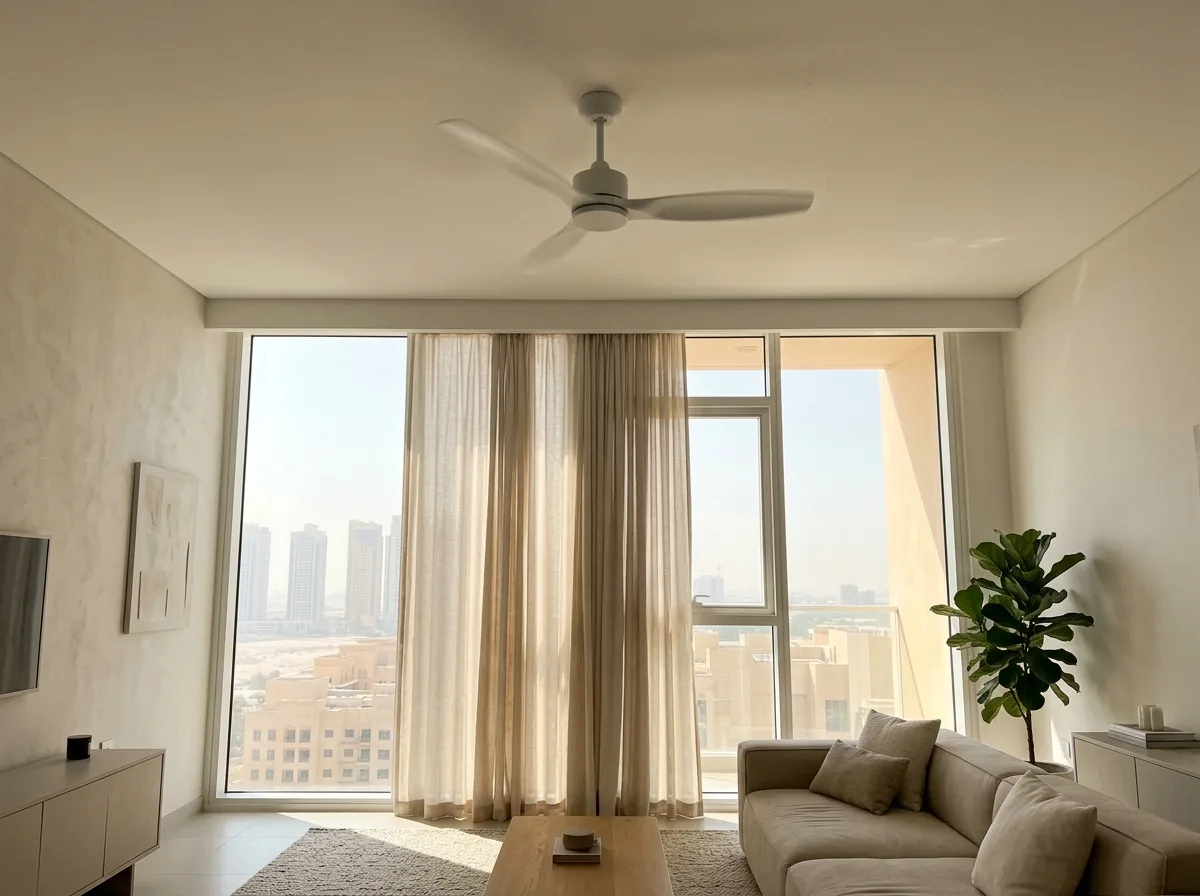
Find your comfortable thermostat setting
The single biggest habit is choosing a sensible temperature and leaving it there. Many households find somewhere around 24 to 25°C comfortable, especially with a fan running. Each degree warmer means your system works less hard. Try nudging the setting up by one degree for a few days, then another if you still feel fine.
A few things to avoid:
- Setting it very low to cool a room faster. Most units cool at the same rate whatever the target, so you only overshoot and waste energy.
- Constant fiddling. Frequent changes make the system cycle more.
- Ignoring humidity. If your unit has a dry or dehumidify mode, it can feel cooler at a higher setting.
If someone at home is elderly, very young, pregnant or has a health condition, put their comfort first and speak to a doctor about safe indoor temperatures.
Let fans share the work
Fans don't lower the temperature of a room, but the moving air makes your skin feel cooler, so you can comfortably set the thermostat a little higher. Ceiling fans and pedestal fans use far less energy than air conditioning, which makes them an easy partner rather than a replacement.
Some practical pointers:
- Run fans only when someone is in the room. They cool people, not spaces, so leaving one spinning in an empty bedroom achieves nothing.
- Check the direction. Many ceiling fans have a switch on the body; anticlockwise usually pushes air downwards for a cooling breeze.
- Position pedestal fans thoughtfully. Pointing one towards where you sit or sleep works better than aiming it at a wall.
At night, a gentle fan plus a lighter duvet or cotton sheets can let you raise the bedroom setting noticeably.
Make the most of cooler evenings
As autumn settles in, there will be evenings and early mornings when it is pleasanter outside than in. That is your chance to switch the AC off for a while and let fresh air through.
Check both temperature and humidity before opening up, as a humid evening can leave your home feeling sticky and make the AC work harder later. A weather app on your phone gives you both at a glance. When conditions suit, open windows on opposite sides of the home to create a cross-breeze, and use balcony doors if you have them.
Close everything again before the morning sun builds, to trap the cooler air inside. Keep an eye on dust and sand on windy days, and if you live on a ground floor, think about security before leaving windows open, especially overnight.
Keep the daytime sun out
Sunlight pouring through glass heats your home quickly, and Abu Dhabi's strong sun means even autumn afternoons can warm rooms considerably. Blocking it before it gets in is far easier than cooling the room afterwards.
- Draw blinds and curtains on sun-facing windows during the hottest part of the day, especially west-facing rooms in the afternoon.
- Consider blackout or thermal-lined curtains for bedrooms and living areas that catch a lot of sun.
- Ask about reflective window film if you rent; get your landlord's agreement first, as some buildings have rules about window appearance.
- Close doors to rooms you aren't using so cooled air stays where you need it.
Outdoor shading, such as awnings or plants on a terrace, can also help villa owners, though check community guidelines before adding anything permanent.
Cool only the rooms you use
If your home has separate units or thermostats for different rooms, use them as zones. There is little point cooling a guest room, study or second lounge that sits empty for most of the day.
Switch off or raise the setting in unused rooms, and keep their doors shut. Avoid letting closed rooms get extremely hot and stuffy for long stretches, though, as trapped humidity can encourage mould and musty smells. A moderate setting in rarely used spaces is a reasonable middle ground.
Timers and programmable or smart thermostats make zoning easier. You might set the living area to cool shortly before you get home from work, rather than running all day, and have bedrooms come on an hour or so before bedtime. If you aren't sure how your controls work, the manual or your building's maintenance team can usually explain.
Look after your AC unit
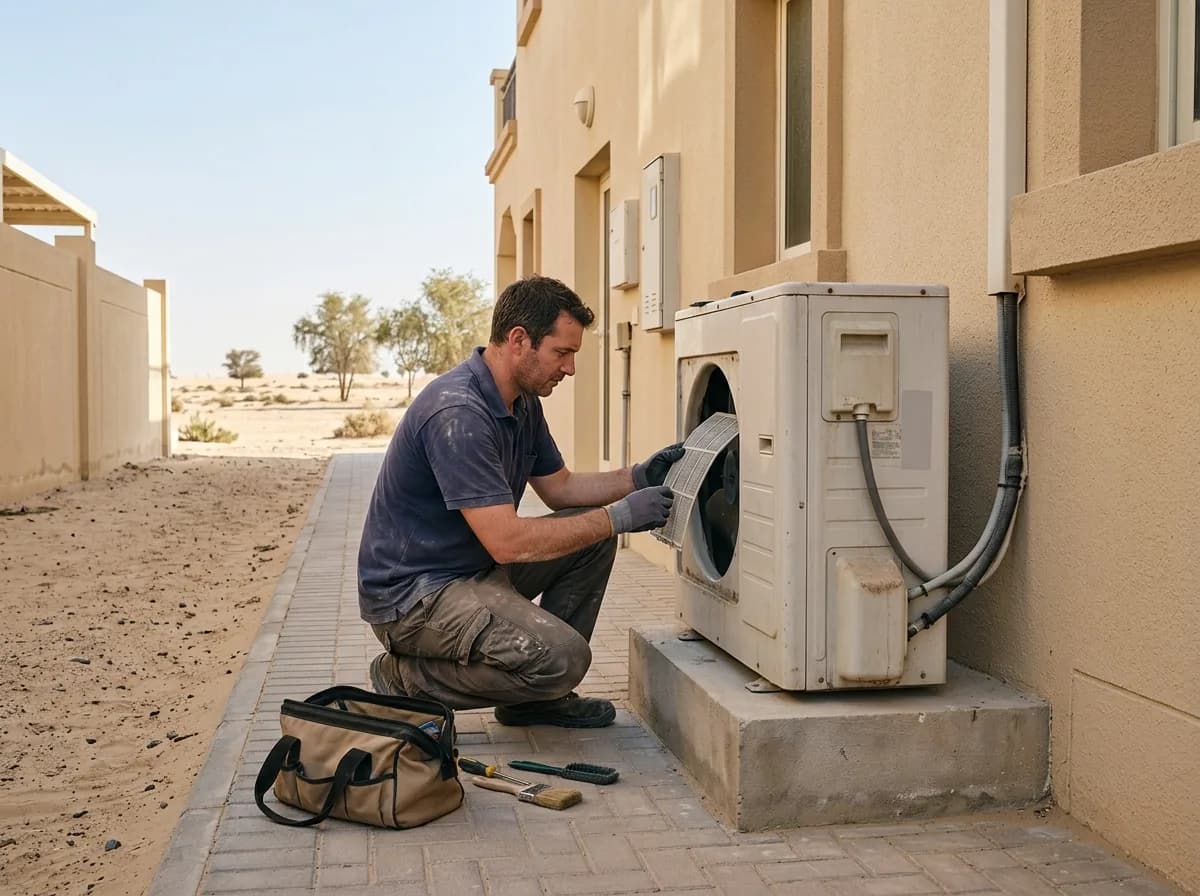
A clean, well-maintained system cools more efficiently. Dusty filters force the unit to work harder, and in a sandy climate they clog faster than you might expect.
- Clean or check washable filters regularly, perhaps every few weeks during heavy use. Switch the unit off first and follow the manufacturer's instructions.
- Keep vents and returns clear of furniture, curtains and stored boxes.
- Book a professional service at least once a year, ideally before the hottest months, to check refrigerant, coils and drainage.
Leave anything involving wiring, refrigerant or opening up the unit to a qualified technician; it isn't safe to attempt yourself. If you rent, report leaks, odd noises, water dripping indoors or weak cooling to your landlord or building management promptly, as small faults can quietly push your usage up.
Reduce heat from inside and track your usage
Everyday activities add heat your AC must remove. Cooking on the hob or in the oven during the afternoon, running a tumble dryer and leaving older bulbs on all warm your home.
- Cook in the cooler parts of the day or use smaller appliances like a microwave where it suits.
- Switch to LED bulbs, which give off less heat.
- Air-dry laundry where your building rules allow.
- Turn off TVs, consoles and chargers when not in use.
Finally, look at your bills month by month so you can see whether your new habits are working. Your utility provider's bill or customer account usually shows your consumption. If you live in a building with district or chilled water cooling, that charge may appear separately. If a bill jumps unexpectedly, contact your provider or landlord to ask why.
Frequently asked questions
What temperature should I set my AC to in Abu Dhabi to save money?
Many people find around 24 to 25°C comfortable, particularly with a fan running. Raise your setting gradually by a degree at a time until you find the warmest level that still feels pleasant.
Is it cheaper to leave the AC on all day or switch it off when I go out?
For most homes, raising the setting or switching off rooms you won't use for several hours saves energy, especially with blinds closed to keep heat out. A timer or smart thermostat lets you start cooling shortly before you return.
How often should I clean my AC filters?
During periods of heavy use, checking washable filters every few weeks is a sensible habit, as dust and sand build up quickly. Always switch the unit off first and follow the manufacturer's instructions, and leave deeper servicing to a qualified technician.
Can I open the windows instead of using AC in the cooler months?
Yes, on evenings and mornings when it is cooler and less humid outside, opening windows for a cross-breeze can let you switch the AC off for a while. Close up again before the day heats up, and consider dust and security, particularly on ground floors.
This is general information to help you plan. Something here wrong or out of date? Report a correction.