Married Life in Singapore: Money, In-Laws and Your First Home
Advice · Published 15 October 2026
Reviewed and approved by a NearbyWise editor before publishing.

Getting married in Singapore often means juggling three big conversations at once: how you'll manage money together, how close you'll live to your parents and in-laws, and where you'll eventually call home. Each one touches on values, family expectations and plans for the future, so it's normal for them to feel tangled. The good news is that none of them needs to be settled in a single evening. This guide walks you through practical ways to talk about shared finances, keep relationships with both families warm and plan your first home together, whether that's a BTO flat, a resale flat or a stretch living with family while you wait.
Start with an honest money conversation
Before you merge anything, it helps to understand how each of you thinks about money. Your habits were probably shaped by your own family, so one of you may be a careful saver while the other sees spending on experiences as worthwhile. Neither is wrong. Set aside a relaxed hour, away from wedding admin, and talk through:
- What you earn and owe, including study loans or credit card balances
- Commitments to family, such as giving a regular allowance to parents
- What you're saving for in the next few years
- What counts as a 'big' purchase for each of you, so you know when to check in first Be open, even about things that feel awkward. Hiding a debt or a spending habit tends to cause far more hurt later than sharing it now. Aim to listen rather than judge, and agree to revisit the conversation as life changes.
Choosing a way to share finances
There's no single right way for married couples to handle money. Common approaches include:
- Fully joint: all income goes into one pot and you decide together
- Partly joint: a shared account for household bills, loan repayments, groceries and savings goals, with personal accounts for everything else
- Separate with agreed splits: you each pay set shares of shared costs A partly joint approach can feel like a comfortable middle ground, because it builds teamwork while leaving each of you some independence. If your incomes differ, you might contribute in proportion rather than splitting everything down the middle, so neither person feels stretched. Whatever you choose, write down who pays what and review it every few months. For bigger decisions around loans, insurance or investments, a qualified financial adviser can help you weigh options that suit your circumstances.
Living with in-laws while you wait
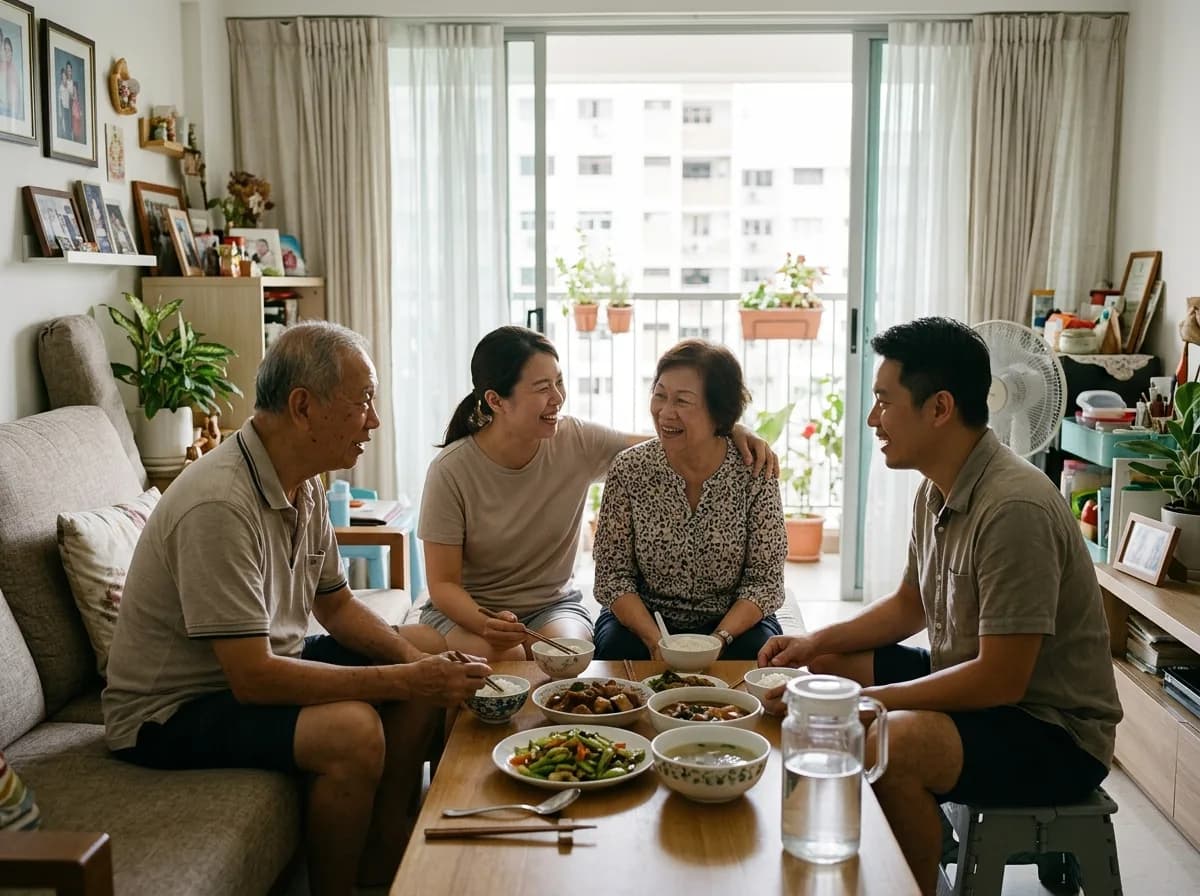
Living with parents or in-laws for a while, perhaps while you wait for a new flat, is a familiar arrangement in Singapore. It can be a lovely chance to build closeness, and it can also test everyone's patience. A few things make it smoother:
- Agree on contributions early, whether that's chipping in for utilities and groceries or helping with chores
- Ask about house routines such as meal times, guests and noise late at night
- Carve out couple time, even if it's a weekly walk in a nearby park or dinner at a hawker centre
- Show appreciation for the space and help you're given Respect that it's their home, and that adjusting takes time on both sides. If tension builds, talk privately as a couple first, then raise concerns gently and together rather than letting resentment simmer.
Setting kind boundaries with both families
Whether you live with family or a few MRT stops away, both sets of parents may have hopes about how often you visit, how you celebrate festivals or how you'll raise any future children. Their involvement usually comes from care, even when it feels like a lot. A helpful principle is that each partner takes the lead with their own family. If your own parent keeps dropping by unannounced, it's often kinder for you, rather than your spouse, to raise it. Present decisions as joint ones ('we've decided') so neither of you is cast as the difficult one. Try to share time fairly between both families, especially around festive seasons, and agree in advance what you're both comfortable with. Boundaries don't have to be cold; you can be firm about your choices while staying warm, grateful and connected.
Planning your first home together
Your first home is likely one of the biggest decisions you'll make together, so give it plenty of time. Start by talking about what matters most to each of you:
- Location: close to work, near parents for support, or near good transport links
- Type of home: a BTO flat, a resale flat or private property, each with different waiting times and trade-offs
- Size and layout: think about the next several years, not just today
- Budget: what you can comfortably afford without straining your day-to-day life Rules on eligibility, grants and loans change from time to time, so check the latest information directly with official government sources rather than relying on hearsay. If you're applying for a BTO flat, discuss how you'll manage the waiting period, including where you'll live and how you'll keep saving in the meantime.
Handling disagreements as a team
Money, family and housing are topics where even close couples clash. When things get heated, try these habits:
- Pause before reacting and return to the topic when you're both calm
- Focus on the shared goal, such as feeling secure or keeping peace with family
- Use 'I' statements, like 'I feel anxious when we don't plan ahead', rather than blame
- Look for compromise, such as trying an arrangement for a few months and then reviewing it Remember that you're on the same team, and it's fine for some questions to take several conversations. If disagreements keep repeating, or stress about money or family starts to affect your wellbeing, speaking to a counsellor or a Family Service Centre can give you both a neutral space to talk. Seeking support early is a sign of commitment, not failure.

Frequently asked questions
Should we combine all our money after marriage?
Not necessarily. Some couples pool everything, others keep separate accounts with a shared one for household costs, and both can work well as long as you're open with each other and review the arrangement regularly.
How do we decide whether to live with our in-laws?
Talk honestly about practical needs, such as savings and waiting times for a flat, alongside how each of you feels about shared living. If you do move in, agree on contributions and routines early and set a rough timeframe so everyone knows what to expect.
How much should we give our parents each month?
There's no fixed amount, as it depends on your income, your parents' needs and your family's expectations. Decide together as a couple, keep it sustainable, and make sure it feels fair to both sides of the family.
What should we do while waiting for our BTO flat?
Use the time to build savings, agree on how you'll furnish and run your home, and settle into a comfortable routine wherever you're living. Check official sources periodically for updates that may affect your plans.
This is general advice, not professional counselling. If a relationship is affecting your safety or wellbeing, speak to a counsellor or a Family Service Centre. Something here wrong or out of date? Report a correction.