Exercising in Singapore's Haze: When to Move Indoors
Advice · Published 29 October 2026
Reviewed and approved by a NearbyWise editor before publishing.

When the haze rolls in, your usual evening run along the park connector can suddenly feel like a gamble. The sky turns grey, there's a smoky smell in the air, and you start wondering whether the workout is worth it. You don't have to guess. Singapore publishes regular air quality updates, and a few simple habits can help you decide in minutes whether to head out, scale back or move things indoors. This guide explains how the readings work, how to check them before you lace up, and how to keep your routine going safely until the skies clear.

Understanding PSI and PM2.5
Singapore reports air quality in two main ways, and it helps to know both. The Pollutant Standards Index (PSI) is a broader measure that reflects several pollutants averaged over a longer period, usually 24 hours. It's useful for planning your day. The one-hour PM2.5 reading tracks fine particles, the main concern during haze, and changes much more quickly. It's the better guide to conditions right now, in the hour you plan to be outside. Both are grouped into named bands, from good and moderate through to unhealthy, very unhealthy and hazardous. The National Environment Agency (NEA) publishes official health advisories that explain what each band means for different groups of people, so the band name matters more to you than memorising any single number.
Which readings mean moving indoors
As a practical rule of thumb, let the band guide the kind of workout you do:
- Good or moderate: most people can carry on as normal, but keep an eye on updates if haze is forecast.
- Unhealthy: this is the point to cut back on long or intense outdoor sessions. A short, easy walk may be fine for some people, but a hard tempo run or outdoor HIIT is better done indoors.
- Very unhealthy or hazardous: move your workout indoors, or swap it for a rest or mobility day.
Always check the official NEA advisory for the current band, as it sets out what's recommended for healthy adults, older people, children and people with existing health conditions. If you're unsure, choosing the indoor option costs you very little.
How to check before you run
Make a quick air check part of your warm-up routine, just like filling your water bottle. Look at the latest official updates from NEA, either on its website or its official app, shortly before you head out rather than relying on a morning reading. Pay particular attention to:
- the one-hour PM2.5 reading for your part of the island, as conditions can differ between regions
- the 24-hour PSI and any forecast for the coming hours
- any current health advisory wording
If readings are rising, or the forecast suggests conditions may worsen while you're out, plan a shorter route close to home or choose indoors. Checking again after a long session is also sensible if you plan a second workout later in the day.
Trust your senses as well as the numbers
Official readings are your starting point, but your own body and surroundings matter too. If you can smell smoke, see noticeably poor visibility, or the air feels heavy and irritating, treat that as a reason to ease off even if the latest update looked acceptable. Readings are averaged across an area and conditions can shift quickly. While exercising, stop and head indoors if you notice anything like coughing that won't settle, a scratchy throat, stinging eyes, unusual breathlessness, chest discomfort or dizziness. Don't push through these to finish a planned distance. If symptoms are severe or don't ease after you've rested in cleaner air, seek medical help promptly. One missed session won't undo your fitness; ignoring warning signs could set you back much longer.
Making indoor workouts work
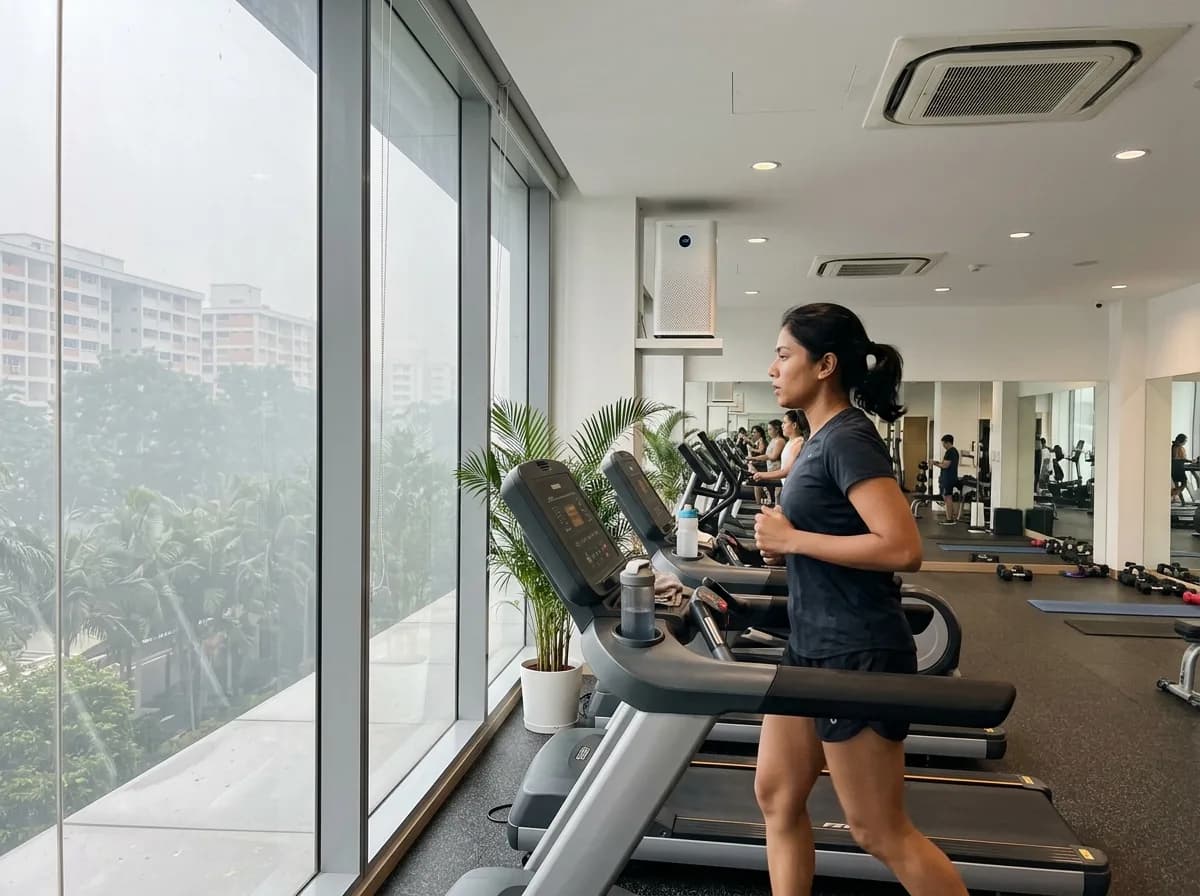
Moving indoors doesn't have to mean losing momentum. You have plenty of options, whether you live in an HDB flat, a condo or anywhere else:
- At home: bodyweight circuits, skipping on a mat, yoga, stretching or a follow-along video in your living room.
- Shared facilities: indoor gyms, sports halls and covered fitness spaces, keeping in mind that some sheltered areas are still open to outdoor air.
- Air-conditioned spaces: these generally offer more protection than open void decks or covered walkways.
Keep windows closed during poor-air periods and use an air purifier if you have one. Treat haze days as a chance to work on strength, flexibility or technique that you might otherwise skip, so you come back to outdoor running feeling well rounded.
Who should take extra care
Some people are more sensitive to haze and should be more cautious, often moving indoors earlier than others. This includes older adults, children, pregnant people, and anyone living with heart or lung conditions such as asthma. If that's you, or someone you exercise with, follow the stricter guidance in NEA's health advisories and speak to your doctor about how haze might affect your activity, especially before haze season. If you train with a group, run club or children's sports team, consider agreeing in advance on when sessions move indoors or get cancelled. A simple, shared rule saves awkward last-minute debates and makes it easier for anyone to step back without feeling they're letting others down.
Frequently asked questions
Is it safe to run outside if the PSI looks fine but the sky seems hazy?
Check the one-hour PM2.5 reading, as it reflects current conditions better than the 24-hour PSI. If you can smell smoke or feel irritation, choose a shorter, easier session or move indoors.
Will wearing a mask let me exercise outdoors during haze?
Masks are not a substitute for avoiding strenuous outdoor exercise in poor air, and some make hard breathing during exercise uncomfortable. Follow official health advisories and choose indoor workouts when readings are high.
Are covered void decks or sheltered courts a good alternative?
They protect you from rain and sun, but they are still open to outdoor air. During poor air quality, an enclosed, air-conditioned space is usually a better choice.
How quickly can I return to outdoor exercise after the haze clears?
Wait until official readings are back in the good or moderate bands and stay there, then ease back in with lighter sessions. If you have a health condition, check with your doctor about returning to harder training.
This is general information, not medical advice. Speak to a doctor before starting something new if you have a health condition. Something here wrong or out of date? Report a correction.