Your First Deepavali With the In-Laws in KL: A Gentle Guide
Advice · Published 14 October 2026
Reviewed and approved by a NearbyWise editor before publishing.
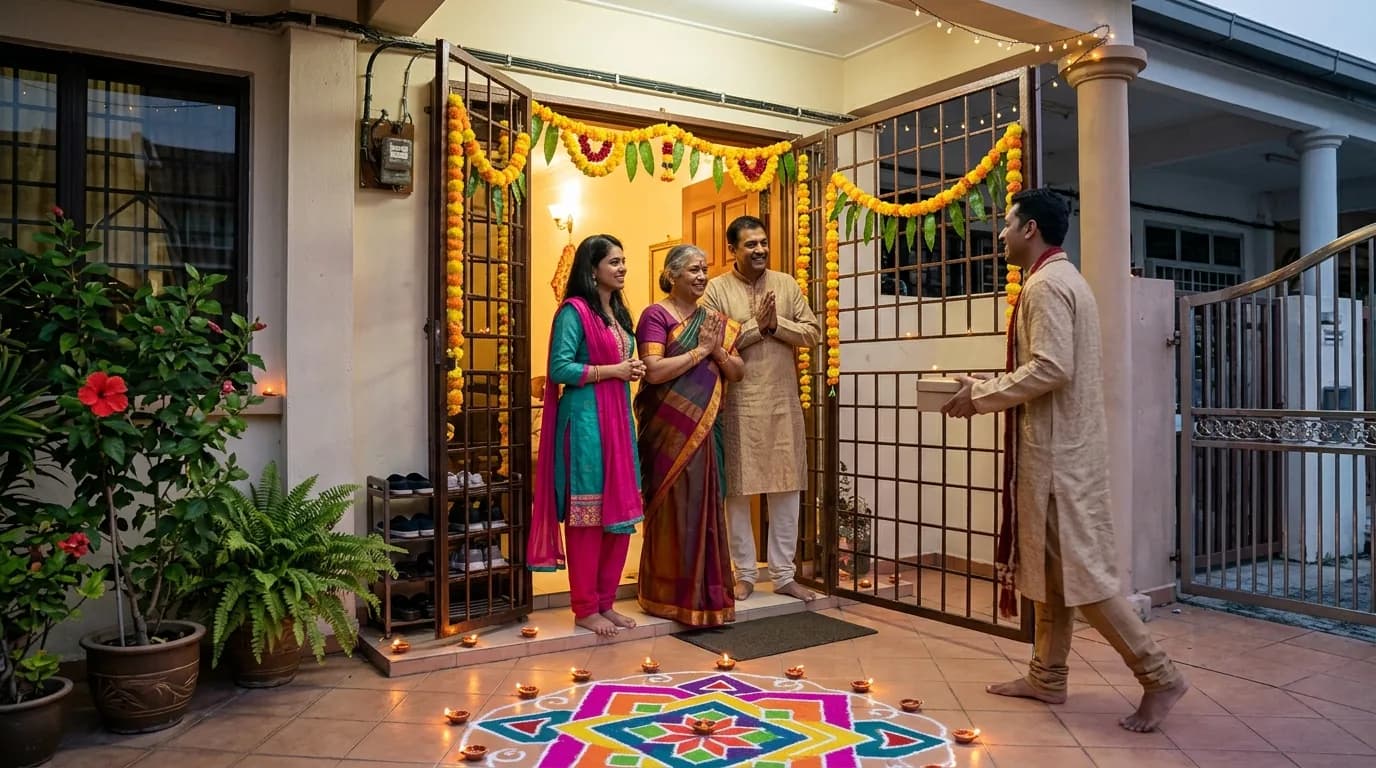
Your first Deepavali with your partner's family is a lovely invitation, and it's natural to feel a little nervous, especially if you've grown up with different customs. The good news is that Deepavali open houses in Kuala Lumpur are usually warm, relaxed and generous occasions, and most families are simply happy you came. What matters most is showing genuine interest, a willingness to learn and respect for their home. This guide walks you through how to prepare, what to wear, which gifts are well received and how to handle the small moments, from greetings to second helpings, with confidence and grace.
Start by Talking to Your Partner
Every family celebrates Deepavali a little differently, so your partner is your best guide. Customs can vary with regional roots, religious practice and simply family habit. A short, relaxed conversation beforehand can save you a lot of worry. Ask about:
- Timing: whether you're expected for an early morning visit, lunch or the open house later in the day
- Who will be there: grandparents, aunts, uncles and cousins, and how to address elders respectfully
- Food and household rules: whether the family is vegetarian, avoids beef or has other preferences
- Prayers or rituals: whether you'll be invited to watch or join, and what's expected of you
Agree on a signal if you ever feel unsure, so your partner can step in gently. Going in prepared shows care, and it makes the day far more enjoyable for both of you.
What to Wear to a Deepavali Open House
Deepavali is a festival of light, so bright, cheerful colours are very welcome. Think rich reds, golds, oranges, pinks, greens and blues. Many families prefer guests to avoid outfits that are entirely black or white, as these can be linked with mourning in some traditions, so ask your partner if you're unsure.
Traditional Indian wear, such as a saree, salwar kameez, kurta or a simple kurta with trousers, is usually appreciated, particularly if it's offered or chosen with your partner's family's guidance. You don't need to wear traditional clothing, though; a smart, modest outfit in festive colours is perfectly fine.
Aim for modest and comfortable: covered shoulders and knees are a safe choice, and you may be sitting on the floor or a low seat. Choose shoes that slip on and off easily, as you'll almost certainly remove them at the door.
Choosing a Thoughtful Gift
You don't need anything elaborate. A gift is a gesture of goodwill, and arriving with something in hand is a kind touch. Well-received options often include:
- Sweets or traditional treats, such as murukku, laddu or other festive snacks
- A basket of fresh fruit, which is simple and widely appreciated
- Decorative items like a small brass lamp or tea lights, fitting for the festival of light
- Something for the home, such as a nice tin of biscuits or quality tea
Check food gifts against the family's dietary practices; anything containing beef should be avoided, and some households prefer vegetarian or eggless items. Many families also don't drink alcohol, so it's best left out unless your partner says otherwise. Present the gift with your right hand, or both hands, ideally to the eldest host.
Greetings, Respect and Small Courtesies
A warm "Happy Deepavali" is always appropriate, and your in-laws may be touched if you learn the Tamil greeting your partner uses at home. Greet elders first, and follow your partner's lead on how: a smile with palms pressed together, a handshake if offered, or simply a polite word.
A few small courtesies go a long way:
- Remove your shoes before entering the house
- Use your right hand for giving, receiving and eating
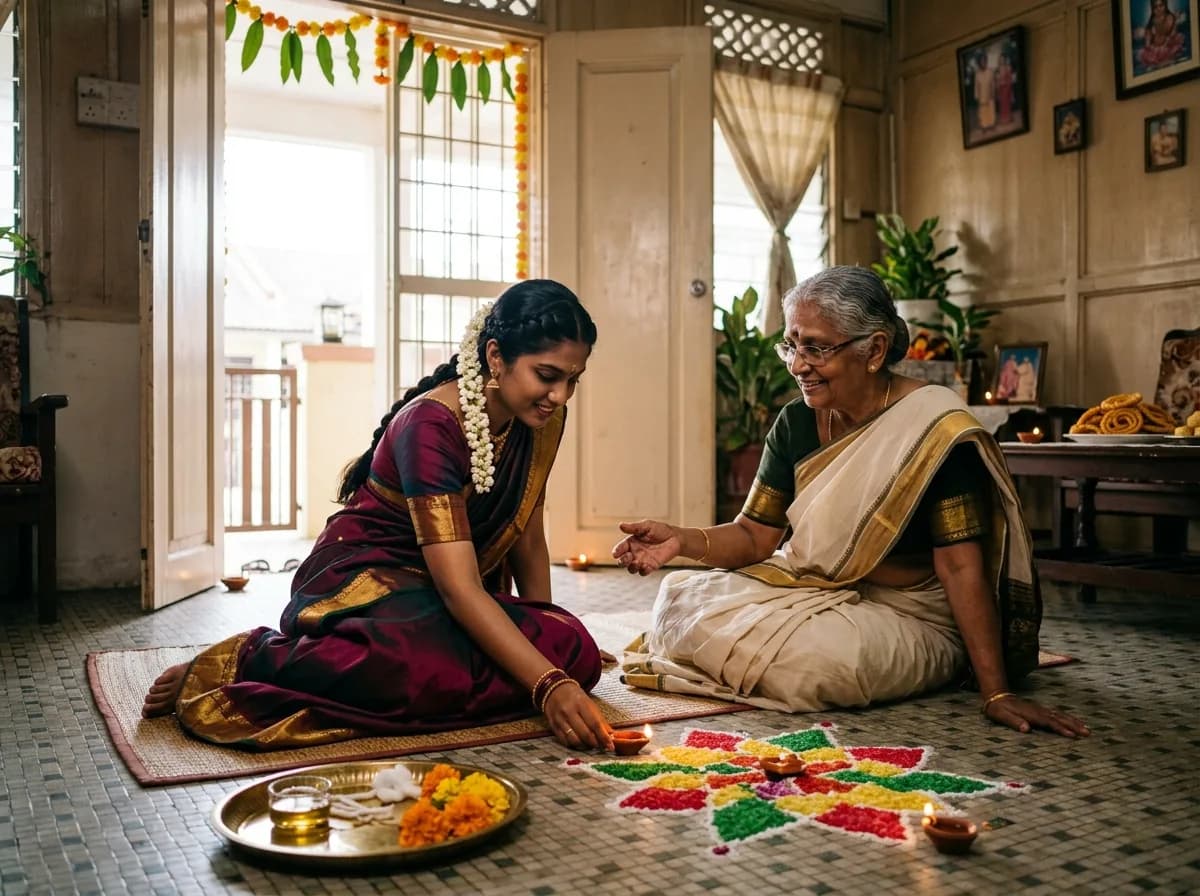
- Step around the kolam, the colourful floor design near the entrance, rather than on it
- Take care near oil lamps, especially with flowing clothing
- Ask before photographing prayer areas or family rituals
If a prayer is taking place, stand or sit quietly. You won't be expected to know everything, and asking politely is a sign of respect, not ignorance.
Enjoying the Food Gracefully
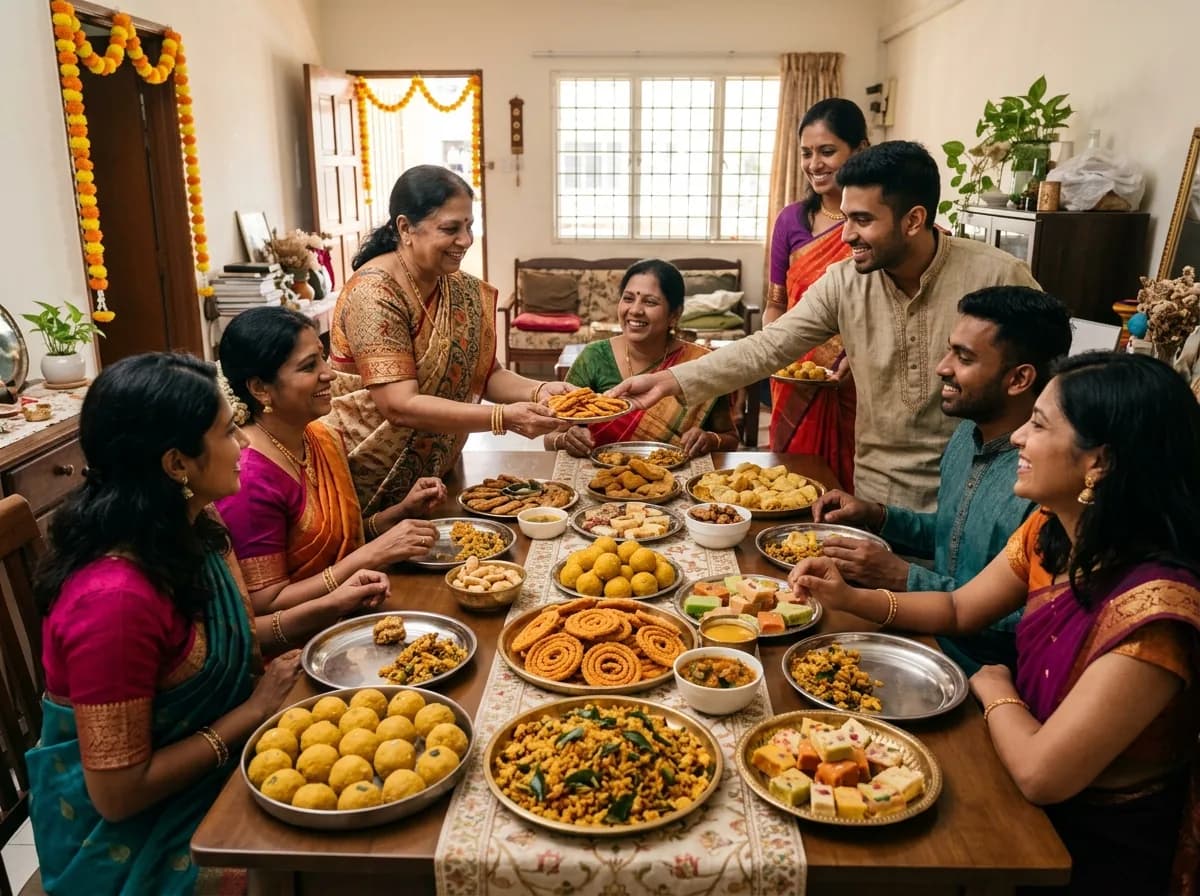
Food is at the heart of most open houses, and your hosts will likely encourage you to eat, and then eat some more. Accept a little of everything you're comfortable with, and take smaller first portions so you have room to try more dishes and accept second helpings.
If food is served on a banana leaf, watch how others eat and follow along. Eating with your right hand is common, but cutlery is usually fine if you're more comfortable; just ask. Compliment specific dishes, as this tends to mean a great deal to whoever cooked.
If you have allergies or dietary needs, let your partner mention them to the family ahead of time so nobody is caught off guard. When you're genuinely full, a polite "It was delicious, I couldn't eat another bite" is usually understood. You'll likely be visiting more than one home, so pace yourself.
Handling Nerves and Differences Kindly
It's normal to feel like you're being watched closely at a first big family gathering, especially across different backgrounds. Try to remember that curiosity from relatives is usually friendly, even if questions about your job, your plans or your own family feel personal. Answer what you're comfortable with, and gently change the subject when you'd rather not.
Show interest in their traditions by asking about the meaning behind the lamps, the kolam or a particular dish. People generally enjoy sharing what matters to them.
If something is said that hurts or feels unfair, try not to respond in the moment. Talk it through calmly with your partner afterwards, and decide together how to handle it. Your partner should be your ally here. If tensions with family become a recurring strain, a relationship counsellor can be a helpful, neutral space for you both.
Saying Thank You and Building the Bond
How you leave matters as much as how you arrive. Before going, thank your hosts personally, especially the elders and whoever prepared the food. Don't rush off straight after eating unless you've agreed this with your partner beforehand; lingering a little to chat is often appreciated.
In the days afterwards, a short message to your mother-in-law or another family member, thanking them for welcoming you, can strengthen the connection. Mentioning something specific, like a dish you loved or a story someone told, makes it feel sincere.
Think of this first Deepavali as the start of a relationship rather than a test. You might offer to help with preparations next year, learn to make one festive sweet, or invite the family to share one of your own celebrations in return. Mutual respect, built gradually, is what turns in-laws into family.
Frequently asked questions
Do I have to wear traditional Indian clothes to a Deepavali open house?
No, it isn't required. A smart, modest outfit in bright festive colours is perfectly acceptable, though many families are pleased if you choose traditional wear with their guidance.
Should I give money packets to children at Deepavali?
Some families give small money packets to children during Deepavali, while others don't. Ask your partner what's usual in their family so you can follow along comfortably.
What gifts should I avoid bringing?
Avoid anything containing beef, and check whether the family is vegetarian before bringing food. Alcohol is generally best left out unless your partner confirms it would be welcome.
What if I make a mistake with the customs?
Small slips are usually forgiven, especially when it's clear you're trying. A sincere apology and a willingness to learn will be appreciated far more than getting everything perfect.
This is general advice, not professional counselling. If a relationship is affecting your safety or wellbeing, speak to a counsellor or a local support service. Something here wrong or out of date? Report a correction.